
Abagrotis trigona
Smith, 1893
Luteous Dart
Abagrotis trigona, commonly known as the luteous dart, is a noctuid first described by Smith in 1893. It occurs across western North America from the northern Great Plains to the Pacific coast, with an isolated disjunct in Ohio. are active in August and have a wingspan of 28–30 mm. The species belongs to the diverse Abagrotis within the Noctuinae.
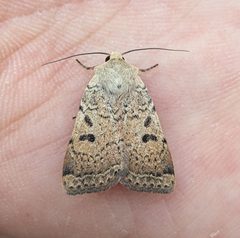
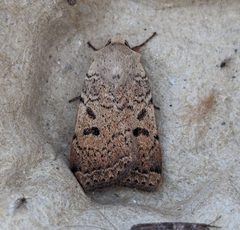

Pronunciation
How to pronounce Abagrotis trigona: /ˌæb.əˈɡroʊ.tɪs traɪˈɡoʊ.nə/
These audio files are automatically generated. While they are not always 100% accurate, they are a good starting point.
Images
Distribution
Western North America from western South Dakota and southwestern Manitoba west across southern Saskatchewan and Alberta to Vancouver Island, south to the Mexican border. A disjunct also occurs in Ohio.
Seasonality
are active in August.
More Details
Original Description
First described as Rhynchagrotis trigona by Smith in 1893, later transferred to Abagrotis.
Sources and further reading
- BugGuide
- Wikipedia
- GBIF taxonomy match
- iNaturalist taxon
- NCBI Taxonomy
- Catalogue of Life
- Eavesdropping Bees Encouraged by "Whispers," Deterred by "Shouts"
- How to Become a Vulture: Tropical Bees and Their Gut Microbes
- Bananas in Belize get some help from stingless bees: Stingless bees, tribe Meliponini — Bug of the Week
- Typocerus deceptus in Missouri | Beetles In The Bush