
Abagrotis brunneipennis
Grote, 1875
Yankee dart
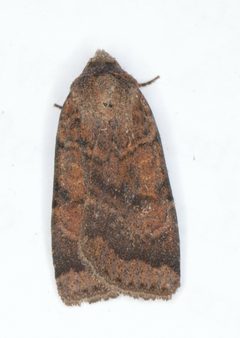
Abagrotis brunneipennis, commonly known as the Yankee dart, is a noctuid described by Augustus Radcliffe Grote in 1875. It has a broad transcontinental distribution across North America, ranging from Newfoundland to Vancouver Island and southward to Oregon, Utah, Colorado, and North Carolina. are active in late summer with a single , while larvae feed on woody plants including Vaccinium species and fallen leaves during winter.
Pronunciation
How to pronounce Abagrotis brunneipennis: /ˌæbəˈɡroʊtɪs ˌbrʌniˈpɛnɪs/
These audio files are automatically generated. While they are not always 100% accurate, they are a good starting point.
Identification
The can be distinguished from other Abagrotis species by its specific wing pattern and coloration, though detailed diagnostic features are not provided in available sources. The "Yankee dart" and its broad northern distribution may aid in field recognition.
Images
Appearance
have a wingspan of 33–37 mm. Specific coloration and pattern details are not documented in available sources.
Habitat
Associated with supporting its larval plants, including areas with Vaccinium and other woody vegetation. Specific habitat preferences beyond host plant associations are not documented.
Distribution
Transcontinental across North America: from Newfoundland west to Vancouver Island, south to west-central Oregon, Utah, Colorado, and North Carolina. Canadian records include Alberta, Manitoba, and Saskatchewan.
Seasonality
are on wing from August to September in a single per year. Larvae are present during winter months, feeding on fallen leaves.
Diet
Larvae feed on various woody plants, specifically documented on Vaccinium . They also consume fallen leaves during winter months. feeding habits are not documented.
Host Associations
- Vaccinium - larval food plantSpecific of Vaccinium not identified
Life Cycle
with one per year. Larval development occurs during winter, with in late summer. Detailed descriptions of , pupal, or early larval stages are not available.
Behavior
Larvae feed on fallen leaves during winter, suggesting a behavioral to seasonal food availability. are , typical of Noctuidae.
Similar Taxa
- Other Abagrotis speciesSimilar general and associations within the ; specific distinguishing features require detailed examination of genitalia or wing pattern elements not documented here.