
Feltia manifesta
(Morrison, 1875)
Adobe Dart
Feltia manifesta, commonly known as the Adobe Dart, is a of or dart moth in the Noctuidae. It was first described by Morrison in 1875 under the name Agrotis manifesta. The species is found in North America, where its larvae develop as subterranean cutworms. have been documented visiting flowers, where they serve as for the ichneumon Ceratogastra ornata.
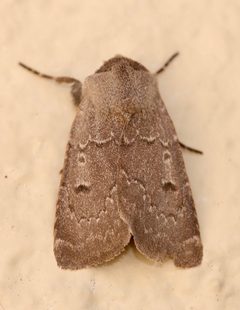
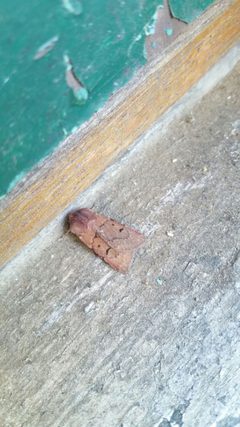
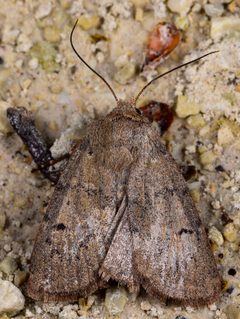
Pronunciation
How to pronounce Feltia manifesta: //ˈfɛl.ti.ə mænˈnɪ.fɛs.tə//
These audio files are automatically generated. While they are not always 100% accurate, they are a good starting point.
Images
Distribution
North America. The has been recorded in the United States and Canada, with 86 observations documented on iNaturalist.
Diet
Larvae are subterranean cutworms that feed on plant material at or below ground level. Specific plants have not been documented.
Host Associations
- Ceratogastra ornata - Ichneumon that parasitizes Feltia or newly-hatched larvae in flower buds; wasp larvae develop as internal of the caterpillars
- Ambrosia artemisiifolia - oviposition siteFemale have been observed laying in buds of Common Ragweed, where they are targeted by
- Eupatorium - oviposition siteDocumented as a site for -laying by females
- Helianthus annuus - nectar source visit extrafloral of Common Sunflower
- Solidago - flower visitor visit goldenrod flowers but oviposition has not been documented from this plant
Life Cycle
Females lay in flower buds of certain plants. Newly hatched caterpillars migrate to the ground and complete development as subterranean cutworms. The has one or more per year, though specific details are undocumented.
Behavior
visit flowers to obtain nectar. Females have been observed inserting into flower buds, a that exposes the eggs to by ichneumon wasps. Larvae live subterraneously as cutworms.
Ecological Role
Larvae function as herbivores in soil . The serves as a for , contributing to complexity in floral .
Human Relevance
Larvae are cutworms that may damage crops or garden plants by feeding on stems at or below ground level, though specific economic impacts have not been documented for this .
Similar Taxa
- Other Feltia speciesMany cutworm moths in the Feltia are morphologically similar and require dissection or genetic analysis for definitive identification; F. manifesta is distinguished by its specific - associations and geographic distribution
More Details
Taxonomic History
Originally described as Agrotis manifesta by Morrison in 1875, later transferred to the Feltia. The is assigned MONA/Hodges number 10666 in North American classification systems.
Research Significance
This is notable for its documented interaction with the ichneumon Ceratogastra ornata, one of the few well-characterized - relationships involving a Feltia . This association has been observed independently by entomologists Eric Eaton and J.C. Bridwell.
Sources and further reading
- BugGuide
- Wikipedia
- GBIF taxonomy match
- iNaturalist taxon
- NCBI Taxonomy
- Good News About Chronic Pain Relief That Began with Caterpillar Research | Bug Squad
- New to science newts from Vietnam with an important message for Biodiversity Day 2020 | Blog
- New Management Methods Emerge for Walnut Husk Fly
- Bug Eric: Ichneumon Wasp: Ceratogastra ornata
- Balancing Eradication and Management: The Role of Biocontrol in Asian Longhorned Beetle Defense
- How a City-Raised Entomologist Found Her Path in Agricultural Pest Management