
Feltia geniculata
(Grote & Robinson, 1868)
Knee-joint Dart
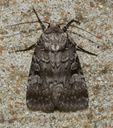
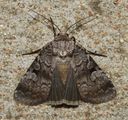
Feltia geniculata, commonly known as the knee-joint dart, is a noctuid native to eastern Canada and adjacent parts of the northeastern United States. are active from July through mid-September and have a wingspan of 29–34 mm. The is known to be parasitized by the ichneumon Ceratogastra ornata, which lays in moth eggs deposited in flower buds.
Pronunciation
How to pronounce Feltia geniculata: //ˈfɛl.ti.ə dʒɪˌnɪ.kjʊˈleɪ.tə//
These audio files are automatically generated. While they are not always 100% accurate, they are a good starting point.
Identification
Available sources do not provide specific diagnostic characters to distinguish Feltia geniculata from other Feltia . The 'knee-joint dart' suggests a possible morphological feature, but this is not described in accessible literature.
Images
Appearance
have a wingspan of 29–34 mm. Specific coloration and pattern details are not well documented in available sources.
Habitat
Specific preferences are not documented. Based on distribution records, the occurs in temperate regions of eastern North America.
Distribution
Eastern Canada: Ontario, Quebec, New Brunswick, Nova Scotia, Prince Edward Island, and Manitoba. Adjacent United States: Massachusetts and likely surrounding northeastern states.
Seasonality
are on wing from July to mid-September.
Diet
Larvae feed on a wide variety of plants. Specific plant records are not documented in available sources.
Host Associations
- Ceratogastra ornata - The ichneumon parasitizes Feltia laid in flower buds; observed on Ambrosia artemisiifolia (Common Ragweed) and Eupatorium thoroughworts
Life Cycle
Females lay in flower buds. Caterpillars hatch and migrate to the ground, where they complete development as subterranean cutworms. The has one per year based on period.
Behavior
Females oviposit in flower buds of certain plants, including ragweed and thoroughworts. This makes vulnerable to by flower-visiting ichneumon wasps.
Ecological Role
As a subterranean , larvae likely function as herbivores and soil-dwelling . The serves as a for , contributing to connections between above-ground flowering plants and soil .
Similar Taxa
- Other Feltia speciesMany Feltia share similar size range, habits, and larval feeding . Specific distinguishing characters for F. geniculata are not documented.
More Details
Parasitoid biology
Ceratogastra ornata has been documented parasitizing Feltia geniculata in Common Ragweed (Ambrosia artemisiifolia) flower buds. This represents a specialized interaction where the intercepts eggs before caterpillars can establish as soil-dwelling cutworms.
Sources and further reading
- BugGuide
- Wikipedia
- GBIF taxonomy match
- iNaturalist taxon
- NCBI Taxonomy
- A Checkered Past, a Checkered Future or Just Checkered? | Bug Squad
- New Management Methods Emerge for Walnut Husk Fly
- Bug Eric: Ichneumon Wasp: Ceratogastra ornata
- Balancing Eradication and Management: The Role of Biocontrol in Asian Longhorned Beetle Defense
- How a City-Raised Entomologist Found Her Path in Agricultural Pest Management
- New Guide Offers Latest in Carrot Weevil Management