
Hypotrix naglei
Lafontaine, Ferris & Walsh, 2010
Hypotrix naglei is a small noctuid described in 2010 from the southwestern United States. It occurs in mountainous regions of Arizona and New Mexico at elevations where aspen and pine forests occur. The has a narrow period in mid-summer and is associated with open meadows within forested .
Pronunciation
How to pronounce Hypotrix naglei: /hɪˈpɒtrɪks ˈneɪɡli/
These audio files are automatically generated. While they are not always 100% accurate, they are a good starting point.
Identification
Distinguished from other Hypotrix by geographic restriction to the southwestern United States and specific mountain ranges in Arizona and New Mexico. Accurate identification requires reference to the original description (Lafontaine, Ferris & Walsh, 2010) or examination of genitalia and wing patterns.
Images
Appearance
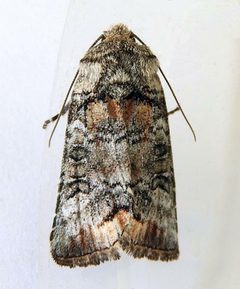
Small with forewing length of 11–12 mm. Wing pattern and coloration details are not described in available sources.
Habitat
Open meadows within forests dominated by aspen and pine. Occurs in montane environments.
Distribution
to southwestern United States: east-central Arizona (White Mountains), southeastern Arizona (Pinaleno and Santa Catalina Mountains), south-central New Mexico (Capitan and Sacramento Mountains), and southwestern New Mexico (Mimbres Mountains).
Seasonality
active from mid-June to mid-July.
Similar Taxa
- Other Hypotrix speciesCongeneric in the Hypotrix share similar and require careful examination for accurate identification; H. naglei is distinguished by its restricted southwestern distribution and specific associations.
More Details
Taxonomic Notes
The was described in a 2010 revision of the Hypotrix. GBIF lists the species under the genus Eriopyga, reflecting historical taxonomic uncertainty in this group, though Catalogue of Life and other sources maintain it in Hypotrix.
Conservation Status
Not assessed; known from few records and restricted to specific mountain ranges, suggesting potential vulnerability to changes in these montane meadow systems.