
Hypotrix ferricola
(Smith, 1905)
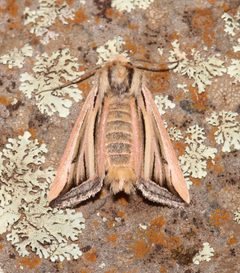
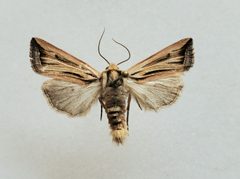
Hypotrix ferricola is a noctuid described by Smith in 1905. It is distinguished by a striking orange and black streaked forewing pattern with visible and spots. The species occurs in southern North America and is closely associated with ponderosa pine forests. are active from early April to early August, with multiple possible.
Pronunciation
How to pronounce Hypotrix ferricola: /haɪˈpɒtrɪks ˌfɛrɪˈkoʊlə/
These audio files are automatically generated. While they are not always 100% accurate, they are a good starting point.
Identification
Distinguished from the closely related Hypotrix aselenographa by three characters: (1) the subterminal line curves outward near the forewing apex rather than remaining nearly straight; (2) the and spots are clearly visible rather than completely obscured; and (3) geographic separation, with H. aselenographa occurring in Mexico.
Images
Habitat
Ponderosa pine forests. Most records are from this specific forest type.
Distribution
Southern North America: south-eastern Arizona, south-western New Mexico, and northern Mexico.
Seasonality
on wing from early April to early August. Multiple may occur during this period.
Similar Taxa
- Hypotrix aselenographaClosely related Mexican distinguished by nearly straight subterminal line (not curved near apex) and completely obscured and spots.
More Details
Taxonomic History
Originally described as Leucania ferricola by Smith in 1905. The has been transferred to the Hypotrix and also placed in Eriopyga by some authorities.
Nomenclatural Note
NCBI lists the authority as (Smith, 1903) rather than (Smith, 1905), and gives the basionym as Leucania ferricola. This date discrepancy may warrant verification.