
Caradrina meralis
Morrison, 1875
Rare Sand Quaker, Sand Quaker
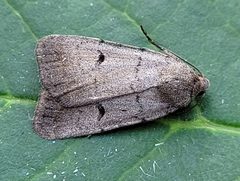
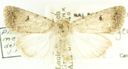
Caradrina meralis, known as the rare sand Quaker or sand Quaker, is a noctuid described by Herbert Knowles Morrison in 1875. It is a North American with a broad transcontinental range spanning southern Canada and the western and northeastern United States. are active in late summer and fall, with a wingspan of 28–30 mm.
Pronunciation
How to pronounce Caradrina meralis: //kæˈrædrɪnə mɛˈreɪlɪs//
These audio files are automatically generated. While they are not always 100% accurate, they are a good starting point.
Identification
Wingspan of 28–30 mm and late summer to fall period may help distinguish from similar Caradrina . Specific diagnostic features for separation from are not documented in available sources.
Images
Habitat
Associated with sandy environments based on ; specific requirements are not well documented.
Distribution
North America: from New Jersey and New Hampshire west across southern Canada (Ontario, Manitoba, Saskatchewan, Alberta, British Columbia) to Wisconsin and Ohio, south to California and Arizona. Confirmed present in Alberta, Manitoba, and Saskatchewan.
Seasonality
active in late summer and fall.
More Details
Taxonomic history
First described by Herbert Knowles Morrison in 1875. The specific epithet and suggest association with sandy substrates, though detailed ecological studies are lacking.
Data availability
Relatively few observations (133 on iNaturalist as of source date) suggest this may be genuinely uncommon or underreported, consistent with its 'rare' .