
Rhizedra lutosa
Hübner, 1803
Large Wainscot, Isle of Wight Wainscot, Large Wainscot Moth
Rhizedra lutosa is a noctuid native to the Palearctic, ranging from Ireland to Japan. It has established in eastern North America following introduction. The is notable for its subterranean larval habit, feeding on reed roots.
Pronunciation
How to pronounce Rhizedra lutosa: /rɪˈzɛ.drə luːˈtoʊ.sə/
These audio files are automatically generated. While they are not always 100% accurate, they are a good starting point.
Identification
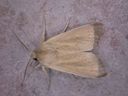
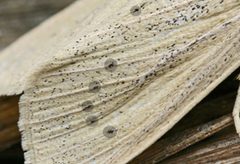
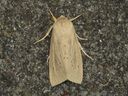
The large size (wingspan 42–50 mm) and dull white forewings with fine blackish dusting distinguish this from smaller wainscot . The row of blackish dots forming the outer line, though often faint, provides a key mark. The whitish hindwings with grey wash separate it from darker noctuids. Aberration crassicornis shows prominent dark streaks and spot rows; rufescens shows red coloration. In eastern North America, combination of size, pale ground color, and reed-associated aids recognition.
Images
Habitat
Associated with reed beds and wetlands containing Phragmites . Larvae occur underground at reed roots.
Distribution
Native: Palearctic from Ireland across Europe and Russia to Japan, including Russian Far East and Siberia. Introduced: eastern North America, where established and spreading. Records also from Southern Asia.
Seasonality
fly July to November, with timing varying by location.
Diet
Larvae feed on roots of reeds (Phragmites ). feeding habits not documented.
Host Associations
- Phragmites - larval food plantlarvae feed underground on roots
Life Cycle
Larval stage feeds underground on reed roots. and -laying details not documented in sources.
Behavior
Larvae exhibit subterranean feeding , remaining underground at reed root systems. period extends across late summer and autumn.
Ecological Role
Root-feeding larvae may influence reed stand dynamics; specific impacts not quantified.
Human Relevance
Introduced to eastern North America, where it has established and is spreading; potential significance for wetland reed management.
Similar Taxa
- Other wainscot moths (Noctuidae)Smaller size and different wing patterns; R. lutosa distinguished by larger size, dull white ground color, and specific association with Phragmites roots.
More Details
Subspecies
Japanese described as griseata Warren, distinguished by greyer hindwings and more distinctly patterned forewings in males.
Aberrations
Two named aberrations: crassicornis Haworth (heavily dusted, streaked form) and rufescens Tutt (red form).