
Resapamea venosa
(Smith, 1903)
cutworm moth, dart moth
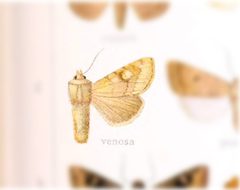
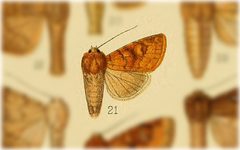
Resapamea venosa is a of in the Noctuidae, commonly known as a or dart moth. The species was first described by Smith in 1903. It belongs to a of moths whose larvae are typically associated with wetland and riparian . The species has been documented in North America with limited observational records.
Pronunciation
How to pronounce Resapamea venosa: /rɛsəˈpeɪmiə ˈvɛnosa/
These audio files are automatically generated. While they are not always 100% accurate, they are a good starting point.
Identification
Resapamea venosa can be distinguished from similar noctuid by its placement in the Resapamea, which is characterized by specific wing venation patterns and genitalic structures. The specific epithet "venosa" likely refers to prominent venation in the wings. Accurate identification to level requires examination of genitalic or reference to specialized taxonomic keys for the genus.
Images
Habitat
in the Resapamea are typically associated with wetland , including marshes, wet meadows, and riparian corridors. Larval stages often feed on emergent aquatic vegetation and grasses in these environments.
Distribution
Documented from North America. Specific range details are limited by sparse collection records. The Resapamea has a primarily Nearctic distribution with occurring across northern and western regions of the continent.
Ecological Role
As a noctuid , the larval stage likely functions as a primary consumer of herbaceous vegetation in wetland . may serve as prey for including bats and owls.
Human Relevance
The has minimal direct human relevance. It is not known to be an agricultural pest. The MONA/Hodges number 9388 is used in North American classification systems.
Similar Taxa
- Luperina spp.Resapamea venosa was historically classified under Luperina; the two share similar wetland associations and require genitalic examination for definitive separation.
- Other Resapamea species such as R. stipata and R. mammuthus overlap in distribution and ; -level identification requires detailed morphological analysis.
More Details
Taxonomic History
The was originally described as Luperina venosa by Smith in 1903. It has since been transferred to the Resapamea, though some taxonomic databases still list it under the synonym Luperina venosa. The genus Resapamea was established to accommodate species previously placed in Luperina that show distinct morphological characteristics.
Collection Rarity
With only 6 observations recorded in iNaturalist as of source date, R. venosa appears to be rarely encountered or underreported. This may reflect genuine rarity, restricted specificity, or undercollection due to its activity and wetland-associated larval .