
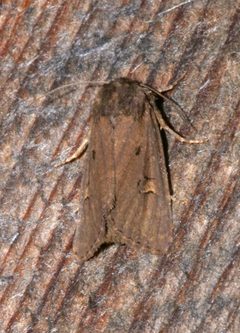
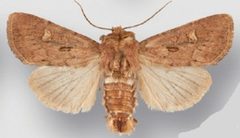
Resapamea passer
Guenée, 1852
Dock Rustic Moth

Pronunciation
How to pronounce Resapamea passer: /rɛsəˈpæmiə ˈpæsɛr/
These audio files are automatically generated. While they are not always 100% accurate, they are a good starting point.
Identification
Forewing length of 15–19 mm distinguishes this from larger or smaller . Association with wetland and Rumex plants may aid identification where multiple Resapamea species occur.
Images
Appearance
Forewing length 15–19 mm. Specific coloration and pattern details are not documented in available sources.
Habitat
Wetlands. The shows strong association with mesic environments across its broad geographic range.
Distribution
Rocky Mountain region from central Alberta to northern Arizona; mid-Continent from Minnesota and southern Ontario south to Oklahoma and North Carolina; Atlantic Coast from Newfoundland to Maryland. Canadian provincial records include Alberta, Manitoba, and Saskatchewan.
Diet
Larvae feed on Rumex (docks and sorrels) and possibly Polygonum species. Larvae bore into stems and roots of plants.
Host Associations
- Rumex - larval food plantstems and roots bored by larvae
- Polygonum - possible larval food plantfeeding inferred from related ; not confirmed
Ecological Role
As a stem- and root-boring herbivore, larvae likely influence Rumex in wetland . The may serve as prey for wetland-associated including birds, bats, and predatory arthropods.
Similar Taxa
- Other Resapamea species share similar and preferences; R. passer distinguished by forewing length, geographic range, and confirmed Rumex association
More Details
Taxonomic Authority
First described by Achille Guenée in 1852.
Observation Frequency
Documented in 275 iNaturalist observations as of source date.