Schinia psamathea
Pogue, 2010
A small noctuid in the Schinia, described in 2010 and to the southeastern United States coastal plain. It is distinguished within its genus by unusually simple wing patterns and strong association with sandy coastal . fly during daylight hours in autumn and are attracted to light.
Pronunciation
How to pronounce Schinia psamathea: /ˈskɪniə psəˈmæθiə/
These audio files are automatically generated. While they are not always 100% accurate, they are a good starting point.
Identification
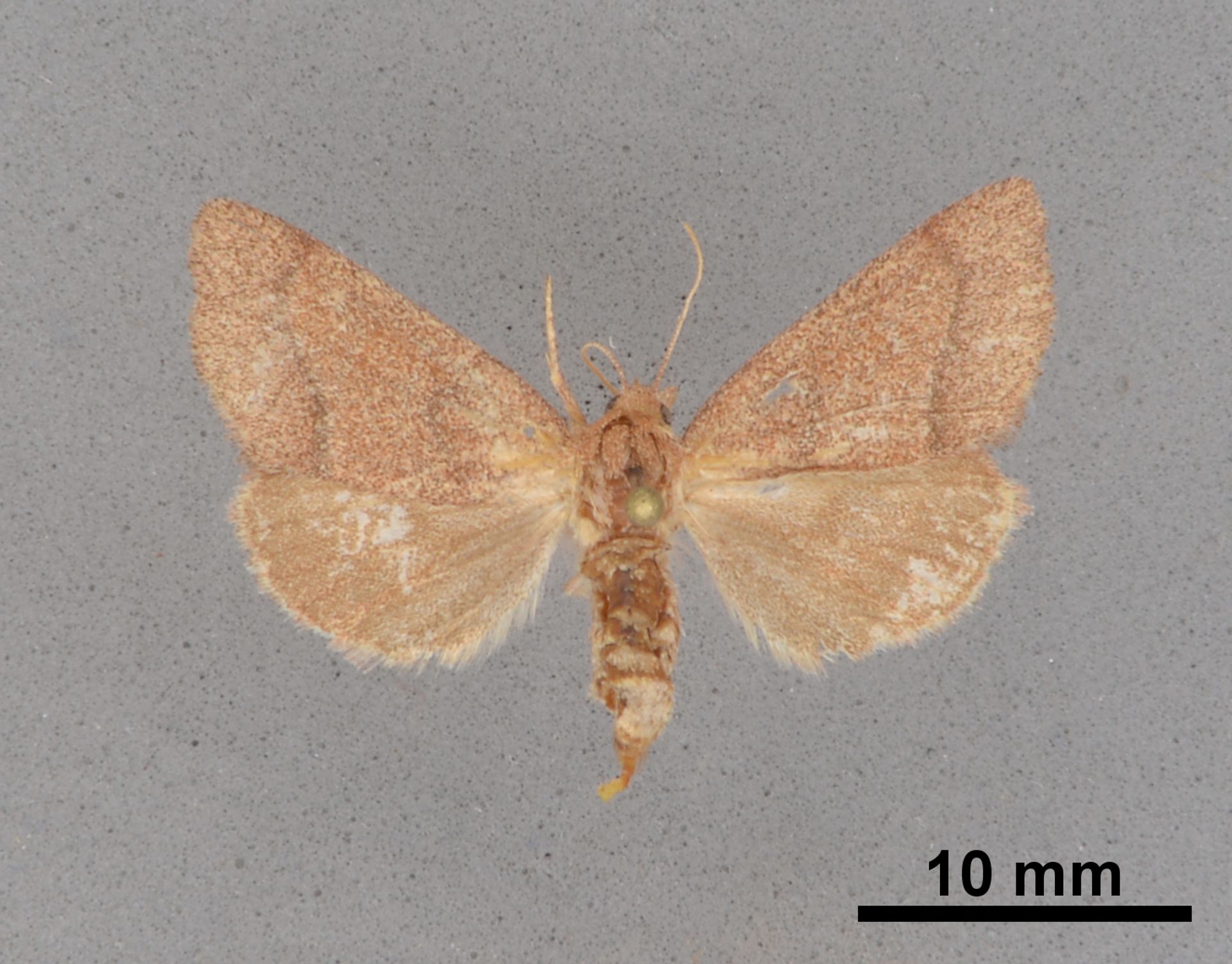
Distinguished from all other Schinia by its simplified wing pattern—lacking the complex bands, spots, or contrasting colors typical of the . The combination of plain forewings with only a sinuate dark postmedial line and unmarked solid hindwings is diagnostic. The sandy coastal also helps narrow identification.
Images
Appearance
Small with forewing length 12.6–14.2 mm in males and 12.6–13.8 mm in females. Forewing pattern is notably simple for the , consisting only of a slightly sinuate dark-brown postmedial line on an otherwise plain background. Hindwing is solid-colored without pattern. This reduced pattern is unique among Schinia .
Habitat
Sandy soils in dune-type or near sandy beaches. Associated with coastal plain environments.
Distribution
Southeastern United States: east-central Georgia southwestward through Florida Panhandle, southeastern Alabama, and southwestern Mississippi.
Seasonality
fly from 7 September through end of October, with peak abundance in mid-October. Active during mid- to late afternoon.
Host Associations
- Chrysoma pauciflosculosa - possible larval Larval feeding has been suggested but not confirmed
Behavior
activity with flying in mid- to late afternoon. Fast, darting pattern similar to other day-flying Schinia . Adults visit flowers for nectar and are attracted to light.
Similar Taxa
- Other Schinia speciesAll other in the have more complex forewing patterns with additional lines, bands, or spots; S. psamathea is unique in its pattern reduction
More Details
Etymology
The specific epithet derives from Greek 'psamathos' (sand of the seashore), referring to the plural sandy coastal this inhabits.
Sources and further reading
- BugGuide
- Wikipedia
- GBIF taxonomy match
- iNaturalist taxon
- NCBI Taxonomy
- Catalogue of Life
- Bug Eric: Wasp Wednesday: Not Wasp VIII
- Catch a Glimpse of Caterpillars During National Moth Week
- Bug Eric: White Prairie Clover: An Awesome Blossom
- Bug Eric: Remembering National Moth Week 2018
- Bug Eric: October 2018
- 2013 Oklahoma Collecting Trip iReport | Beetles In The Bush