Microhelia angelica
Smith, 1900
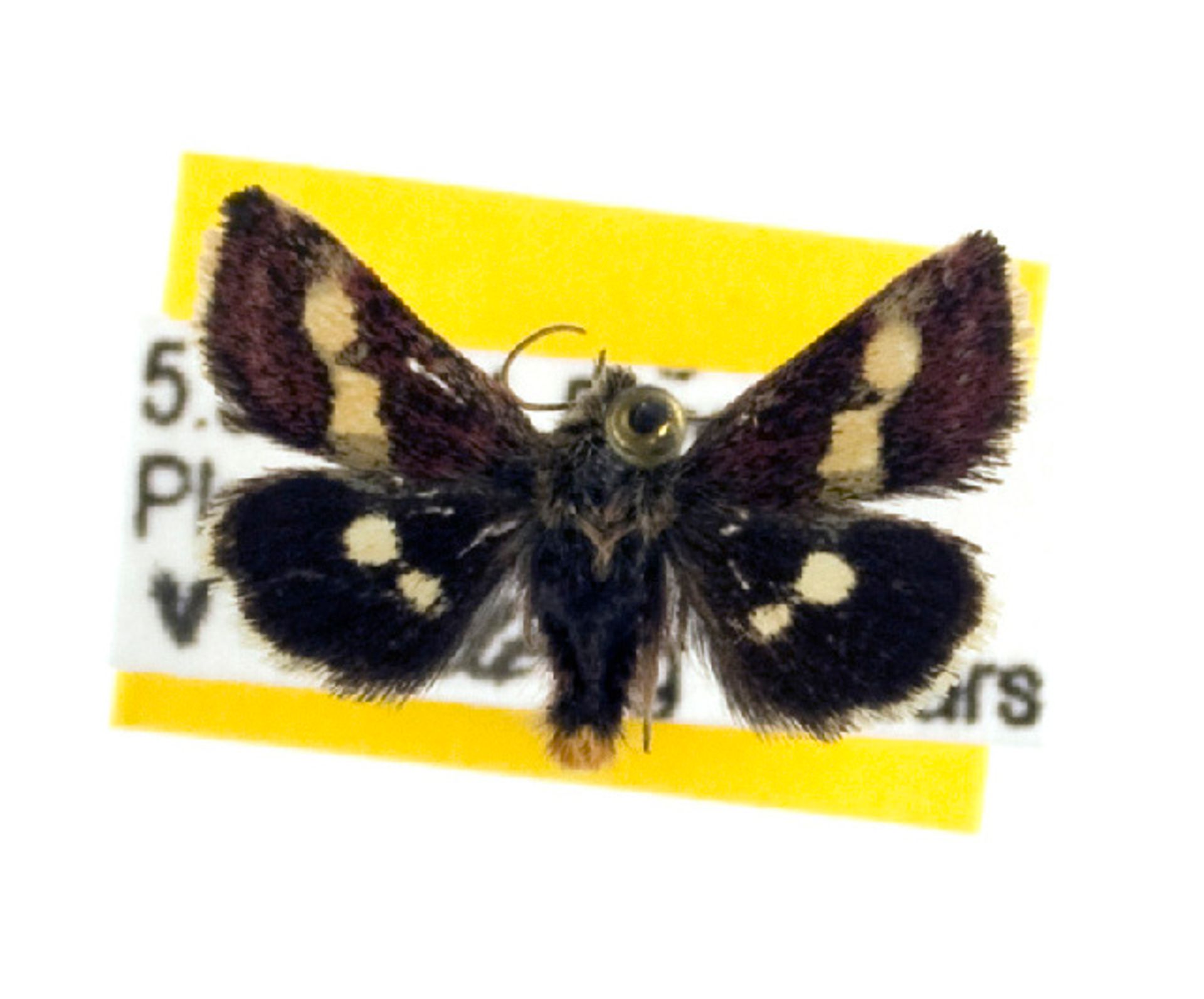
Microhelia angelica is a small noctuid described by Smith in 1900. It occurs along the Pacific coast of North America from California to Washington. The species has a wingspan of 9–13 mm, making it one of the smaller members of the Heliothinae. Little is known of its beyond basic collection records.
Pronunciation
How to pronounce Microhelia angelica: /ˌmaɪkroʊˈhiːliə ænˈdʒɛlɪkə/
These audio files are automatically generated. While they are not always 100% accurate, they are a good starting point.
Identification
The combination of extremely small size (9–13 mm wingspan) for a heliothine noctuid and its restricted Pacific coastal distribution may help distinguish this from other Microhelia species and larger heliothines. However, detailed diagnostic characters are not available in published sources.
Images
Distribution
Pacific coastal region of western North America, from California north to Washington.
Similar Taxa
- Other Heliothinae speciesLarger size; most heliothines exceed 13 mm wingspan
- Other Microhelia speciesMay overlap in range but specific distinguishing characters for M. angelica are not documented
More Details
Taxonomic history
Originally described as Heliodes angelica Smith, 1900, later transferred to Microhelia. The basionym Heliodes angelica reflects early uncertainty in generic placement within Heliothinae.
Data availability
Despite being described over 120 years ago, this remains poorly known. Only 26 observations are recorded in iNaturalist as of the knowledge cutoff, and no detailed morphological descriptions or biological studies have been published.
Sources and further reading
- BugGuide
- Wikipedia
- GBIF taxonomy match
- iNaturalist taxon
- NCBI Taxonomy
- Catalogue of Life
- A Summit to Save the Butterflies | Bug Squad
- A new Critically Endangered frog named after “the man from the floodplain full of frogs” | Blog
- National Meadows Day 2023 in England - Buglife Blog - Buglife
- Winter Botany Quiz #6 – answers and a checklist | Beetles In The Bush
- Hitchin' a Ride: A Review of Firewood as a Vector of Forest Pests in North America
- New species of owl discovered on Príncipe Island