
Derrima stellata
Walker, 1818
pink star moth
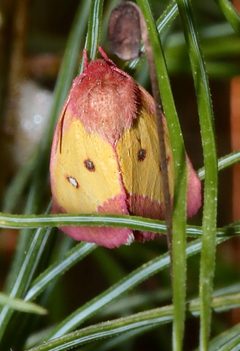
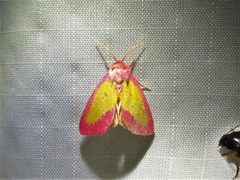
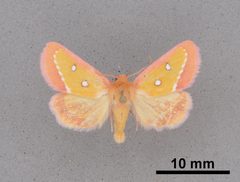
Derrima stellata, commonly known as the pink star , is a small noctuid moth native to eastern North America. The has a wingspan of 21–30 mm and exhibits periods in spring and summer. It was historically notable among lepidopterists for its poorly understood , which was resolved in 2024 when larvae were discovered feeding on seeds of dead pinweed (Lechea species). The species is listed as a species of special concern in Connecticut, reflecting apparent rarity or loss in parts of its range.
Pronunciation
How to pronounce Derrima stellata: /dɛˈriːmə stɛˈlɑːtə/
These audio files are automatically generated. While they are not always 100% accurate, they are a good starting point.
Identification
have a wingspan of 21–30 mm. The can be distinguished from similar noctuids by the combination of its small size, pinkish coloration, and the star-like pattern on the forewings that gives the species its . Specific diagnostic features beyond general coloration are not well documented in available sources.
Images
Habitat
Associated with dry, sandy where its plant pinweed (Lechea ) occurs. The 2024 larval discovery was made in southern New Hampshire on seeds of a dead pinweed plant, suggesting open, disturbed, or early successional areas with this plant .
Distribution
Eastern North America from southern Maine south to Florida, west to Missouri and Texas. Records from Vermont confirm northern range extent.
Seasonality
are active from April to May and from July to August, with two per year.
Diet
Larvae feed on seeds of pinweed (Lechea ), as confirmed in 2024. This represents the first documented plant relationship for the species.
Host Associations
- Lechea - larval seeds of dead plants; confirmed 2024
Life Cycle
Two per year. Larvae feed on pinweed seeds and overwinter as pupae. emerge in spring (April–May) and again in mid-summer (July–August).
Behavior
are and attracted to light. When disturbed, larvae and adults likely exhibit typical noctuid defensive , though specific behaviors are not documented.
Ecological Role
As a seed-feeding on pinweed, likely functions as a primary consumer in early successional plant . Potential prey for including birds, bats, and .
Human Relevance
Listed as a of special concern in Connecticut, indicating conservation interest. Historically significant among eastern North American lepidopterists due to the long-standing mystery of its larval , which was described as "the Holy Grail for in the East Coast" by David L. Wagner.
Similar Taxa
- Other Derrima speciesSame ; D. stellata distinguished by pink coloration and star-like forewing pattern
- Other small HeliothinaeSimilar size and general form; D. stellata identified by specific pink coloration and wing pattern
Sources and further reading
- BugGuide
- Wikipedia
- GBIF taxonomy match
- iNaturalist taxon
- NCBI Taxonomy
- Catalogue of Life
- Bug Eric: Spider Sunday: Star-bellied Orbweaver, Acanthepeira stellata
- Bug Eric: Spider Sunday: Starbellied Orbweaver
- Megalopygidae | Beetles In The Bush
- A Riot of Colors | Beetles In The Bush
- These are a few of my favorite trees | Beetles In The Bush
- Cynipidae | Beetles In The Bush