
Grotella septempunctata
Harvey, 1875
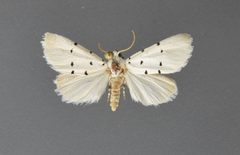
Grotella septempunctata is a small noctuid described by Leon F. Harvey in 1875. It is characterized by distinctive black spotting on white forewings, with seven spots giving the its name. The moth occurs in the southwestern United States, primarily from Texas to Colorado. It has been documented at blacklight events in Colorado during summer months.
Pronunciation
How to pronounce Grotella septempunctata: //ɡroʊˈtɛlə sɛptɛmˌpʌŋkˈteɪtə//
These audio files are automatically generated. While they are not always 100% accurate, they are a good starting point.
Identification
The combination of small size (21 mm wingspan), pure white forewings with seven distinct black spots in two transverse rows, white /, and brown separates this from other Grotella. The specific epithet 'septempunctata' refers to the seven spots. Similar Grotella species may lack this precise spot pattern or have different abdominal coloration. The yellow and black-banded legs are additional distinguishing features. Genitalia examination may be required for definitive identification from closely related species.
Images
Appearance
A small with wingspan approximately 21 mm. and pure white; brown with yellowish-white tinge. Palpi and black-brown; yellow. Legs with tibiae and banded with black. Forewings almost pure white with black markings: costal edge black at base; subbasal black points below and in ; small antemedial black spots on costa, in submedian fold, and on inner margin (the fold spot slightly nearer base); small postmedial black spots on costa, at discocellulars, in submedian fold, and on inner margin. Hindwings white with area to discocellulars and 3 tinged with fuscous brown. Underside of forewing fuscous brown except inner area and cilia; costal area of hindwing also fuscous brown.
Habitat
Specific preferences are not well documented. Observations from Cheyenne Mountain State Park and similar locations in Colorado suggest occurrence in montane and foothill environments. The has been attracted to blacklights in areas with mixed vegetation including trees, shrubs, and herbaceous plants.
Distribution
North America, from Texas to Colorado. Documented in Colorado at Cheyenne Mountain State Park (July 24, 2018) and in the broader region from Texas through Colorado.
Seasonality
have been observed in July, specifically documented on July 24 at Cheyenne Mountain State Park, Colorado. This coincides with National Week timing, suggesting peak adult activity in mid-summer.
Behavior
; attracted to ultraviolet and mercury vapor lights. are active during summer months.
Ecological Role
may serve as prey for including bats and owls. Larval unknown; potential herbivore or based on characteristics.
Human Relevance
Occasionally encountered by enthusiasts during blacklighting events. No significant economic or medical importance documented.
Similar Taxa
- Other Grotella speciesSimilar size and general appearance, but distinguished by spot pattern, abdominal coloration, and genitalia
More Details
Type specimen
described by Leon F. Harvey in 1875
Observation record
Documented photographically by Eric Eaton at Cheyenne Mountain State Park, Colorado, July 24, 2018, during National Week event
Sources and further reading
- BugGuide
- Wikipedia
- GBIF taxonomy match
- iNaturalist taxon
- NCBI Taxonomy
- Catalogue of Life
- Deep Look's Award-Winning Aphid Video by Josh Cassidy--and a UC Davis Entomologist's Role | Bug Squad
- Bug Eric: Remembering National Moth Week 2018
- Bug Eric: October 2018
- Limb Regeneration in Lady Beetles: Product of Selection or Developmental Byproduct?
- Tabloid Sensationalism Aside, Lady Bugs Are Still Fascinating
- Home invader turned garden helper – Multicolored Asian lady beetle, Harmonia axyridis — Bug of the Week