
Marimatha nigrofimbria
Guenée, 1852
Black-bordered Lemon Moth
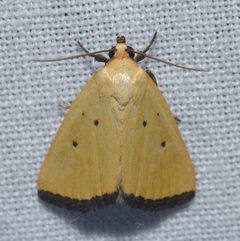
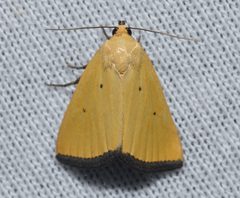
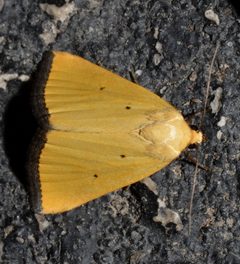
Marimatha nigrofimbria, the Black-bordered Lemon , is a small noctuid moth with a wingspan of 18–22 mm. It is characterized by yellowish forewings with distinct black borders along the outer margins. The is widespread in eastern North America, with extending west to Arizona and California. It is listed as Critically Imperiled in New York State due to its position at the northern range limit.
Pronunciation
How to pronounce Marimatha nigrofimbria: /məˈraɪməθə nɪɡroʊˈfɪmbriə/
These audio files are automatically generated. While they are not always 100% accurate, they are a good starting point.
Identification
The combination of small size, yellowish forewings, and conspicuous black borders on the outer wing margins distinguishes this from similar small yellow . The black marginal band is the most reliable field mark. It can be separated from other Marimatha species by wing pattern and geographic range.
Images
Appearance
Small with yellowish to pale lemon-colored forewings. The outer margins of the forewings are bordered with black, giving the its . Hindwings are pale. Wingspan measures 18–22 mm.
Habitat
Occurs in open including lawns, meadows, and disturbed areas. Has been observed in residential yards and parks. Larval habitat includes areas with grasses and morning glories.
Distribution
North America east of the Rocky Mountains, with additional in Arizona and California. Range extends from Massachusetts west through northern Ohio to Illinois and Oklahoma, and south to southern Florida and southernmost Texas. Northern range limit in New York State.
Seasonality
active from May to September in northern portions of range; March to November in southern portions. Peak activity during summer months.
Diet
Larvae feed on Digitaria ischaemum (smooth crabgrass) and Ipomoea sagittata (arrowleaf morning glory). feeding habits not documented.
Host Associations
- Digitaria ischaemum - larval foodplantsmooth crabgrass, a common lawn weed
- Ipomoea sagittata - larval foodplantarrowleaf morning glory
Behavior
are and attracted to light. Has been observed resting in lawns during daytime, where individuals can be flushed from vegetation. Regularly occurs at residential blacklight setups.
Ecological Role
Larval herbivore on grasses and morning glories. serve as prey for . Part of lawn and meadow .
Human Relevance
Occasionally noticed by homeowners due to lawn-dwelling and attraction to outdoor lights. Not considered a pest. Subject of citizen science observations during National Week and similar events.
Similar Taxa
- Other Marimatha speciesSimilar size and general appearance; distinguished by wing pattern details and black marginal borders
- Small yellow geometrid mothsSimilar coloration and size; lack the distinctive black marginal wing borders
More Details
Conservation Status
Listed as Critically Imperiled in New York State. This status reflects the ' position at the northern edge of its range rather than overall decline across the entire distribution.
Taxonomic History
Originally described as Xanthoptera nigrofimbria by Achille Guenée in 1852; later transferred to Marimatha.