
Callopistria
Hübner, 1821
Fern Moths
Species Guides
5- Callopistria cordata(silver-spotted fern moth)
- Callopistria floridensis(Florida Fern Moth)
- Callopistria granitosa(Granitose Fern Moth)
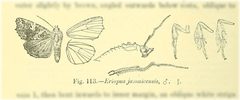
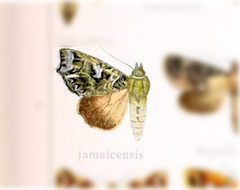
- Callopistria jamaicensis
- Callopistria mollissima(Pink-shaded Fern Moth)
Callopistria is a of in the Noctuidae, commonly known as fern moths. The genus was established by Jacob Hübner in 1821 and contains approximately 90 described distributed across tropical and subtropical regions worldwide. Members are characterized by distinctive morphological features including bipectinate , hairy without tufts, and specialized wing structures in males.

Pronunciation
How to pronounce Callopistria: //ka.loˈpɪs.tri.a//
These audio files are automatically generated. While they are not always 100% accurate, they are a good starting point.
Identification
Distinguished from similar noctuid by the combination of: bipectinate (both sexes), naked without lashes, short upturned porrect palpi reaching above vertex, spineless strongly tufted tibiae, and male hindwings with distinctive ridge and fold structure on underside. The forewing shape—short and broad with rounded apex and non-crenulate cilia—further separates this genus from related with more elongate or scalloped-winged forms.
Images
Appearance
naked, without lashes. well developed. Palpi short, upturned, obliquely porrect (extending forward), roughly scaled, reaching above vertex of . bipectinate (comb-like on both sides). hairy, lacking tufts. with tufts on segments; males with large lateral and anal tufts. Tibia spineless, strongly tufted. Forewings short and broad with non-crenulate (non-scalloped) cilia; apex rounded; inner margin lobed near base with slight tooth of at outer angle. Hindwings of male with ridge and fold on underside running from center of to lower angle of , then to center of outer margin.
Distribution
Tropical and subtropical regions worldwide. documented from Africa (including Madagascar), Asia (Southeast Asia, Japan, India), the Americas (Caribbean, Central and South America), and Europe (Denmark, Sweden). Specific distribution varies by species; some species have restricted ranges while others are more widespread.
Similar Taxa
- Other Eriopinae generaShare placement but differ in structure (Callopistria has bipectinate antennae), palpi form, and male hindwing modifications
- General NoctuidaeDistinguished by the unique combination of naked , specific palpi orientation, and male hindwing ridge/fold structure not typical of most noctuids
More Details
Taxonomic placement
Classified in Eriopinae within Noctuidae; some classifications have historically placed related in different subfamilies, but current treatments maintain Eriopinae as the appropriate placement based on morphological synapomorphies.
Species diversity
The contains approximately 90 described , with ongoing taxonomic work suggesting additional undescribed species may exist, particularly in under-sampled tropical regions.