
Leuconycta lepidula
(Grote, 1874)
Marbled-green Leuconycta Moth, Marbled-green Jaspidia, Dark Leuconycta
A small noctuid with a wingspan of approximately 30 mm. are active from May to August with a single per year. The is widely distributed across North America, from eastern Canada through the eastern and central United States. Larvae feed on dandelions (Taraxacum species).
Pronunciation
How to pronounce Leuconycta lepidula: //ˌljuːkəˈnɪktə lɛpɪˈduːlə//
These audio files are automatically generated. While they are not always 100% accurate, they are a good starting point.
Identification
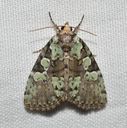
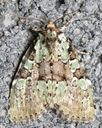
The marbled green forewing pattern distinguishes this from most other small noctuids. The specific shade of green with dark marbling, combined with the small size (30 mm wingspan), helps separate it from similar Leuconycta species and other greenish noctuids in the same range.
Images
Habitat
Found in open where plants grow, including meadows, fields, roadsides, and disturbed areas. Associated with areas supporting Taraxacum .
Distribution
North America: Nova Scotia to North Carolina, west to Texas, and north to Alberta. Present in Canadian provinces of Alberta, Manitoba, and Saskatchewan; and in the United States from Vermont southward.
Seasonality
active May to August. Single per year ().
Diet
Larvae feed on Taraxacum , including Taraxacum officinale (common dandelion). feeding habits not documented.
Host Associations
- Taraxacum officinale - larval plantcommon dandelion
Life Cycle
One per year. stage not specified in available sources. Larval development occurs on plants; emerge in late spring through summer.
Behavior
. attracted to light.
Ecological Role
Herbivore as larvae, consuming Taraxacum . Role in as prey for birds, bats, and other likely but not documented.
Human Relevance
Larvae feed on common dandelion, a widespread weed , but not known to be used for . No significant economic impact.
Similar Taxa
- Other Leuconycta speciesSimilar size and general appearance; distinguished by specific forewing pattern and coloration details.
- Greenish noctuids in subfamily CondicinaeOverlap in size and ; require examination of wing pattern and genitalia for definitive identification.
More Details
Taxonomic history
Originally described as Jaspidia lepidula by Grote in 1874; later transferred to Leuconycta.
Observation frequency
Well-documented with over 2,500 observations on iNaturalist, indicating it is frequently encountered and photographed.