
Homophoberia apicosa
(Haworth, 1809)
Black Wedge-spot
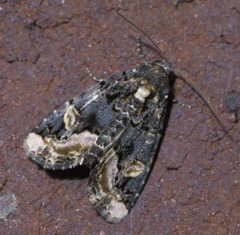
Homophoberia apicosa, commonly known as the black wedge-spot, is a noctuid first described by Adrian Hardy Haworth in 1809. It is classified in the Noctuidae (owlet moths) and Condicinae. The species is native to North America and has been documented in at least 3,000 observations. It is assigned Hodges number 9057 in the North American moth numbering system.
Pronunciation
How to pronounce Homophoberia apicosa: /həˌmɒfəˈbɪəriə æpɪˈkoʊsə/
These audio files are automatically generated. While they are not always 100% accurate, they are a good starting point.
Images
Distribution
North America; specifically documented in Vermont and other regions of the United States.
Human Relevance
Assigned MONA/Hodges number 9057, used in North American identification systems. Documented in citizen science platforms with over 3,000 observations.
More Details
Taxonomic History
Originally described as Phytometra apicosa by Haworth in 1809, later transferred to Homophoberia.
Observation Data
Well-documented in citizen science with 3,060 iNaturalist observations as of source date.