
Euscirrhopterus gloveri
Grote & Robinson, 1868
Purslane Moth
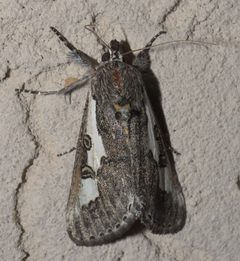
Euscirrhopterus gloveri, commonly known as the purslane moth, is a of owlet moth in the Noctuidae. First described by Grote and Robinson in 1868, it is native to North America. The species is notable for its distinctive wing patterning and association with portulacaceous plants. Larvae have been documented in numbers on purslane relatives.
Pronunciation
How to pronounce Euscirrhopterus gloveri: //juːsɪˌroʊptərəs ˈɡloʊvɛraɪ//
These audio files are automatically generated. While they are not always 100% accurate, they are a good starting point.
Identification
Distinguished from similar noctuid by the combination of cryptic forewings and brightly colored hindwings used as a flash display. The specific wing pattern and coloration of the hindwings separate it from related Euscirrhopterus and other owlet moths with similar defensive strategies. Accurate identification may require examination of genitalia or reference to regional faunal guides.
Images
Appearance
have forewings with cryptic patterning in muted browns and grays, providing camouflage against bark or soil surfaces. The hindwings are brightly colored, typically orange or red with dark markings, which are normally concealed at rest but flashed as a startle defense when the is disturbed. The body is moderately robust with a furry . Wingspan and precise coloration details are not well documented in available sources.
Habitat
Associated with open, dry including prairies, grasslands, and desert scrub where plants in the portulacaceae occur. Found in areas with sandy or disturbed soils supporting purslane relatives. are attracted to artificial light sources.
Distribution
North America. Documented from the southwestern United States including Texas, New Mexico, Arizona, and Colorado, with records extending into adjacent regions. The full extent of its range is not completely characterized.
Seasonality
are active during summer months, with records from July in Colorado and observations from July–August in the southwestern states. Larval activity has been documented in summer when plants are in active growth.
Diet
Larvae feed on plants in the portulacaceae , particularly Portulaca and related . likely do not feed; specific adult diet is not documented.
Host Associations
- Portulaca - larval primary
- Talinum - associatedlarvae observed in numbers near Talinum aurantiacum in Arizona
Life Cycle
Complete with , larval, pupal, and stages. Larvae are present in summer and have been observed in numbers in some years. likely occurs in soil or debris. Specific details of developmental timing and stage are not well documented.
Behavior
exhibit a startle defense : when disturbed, they flash their brightly colored hindwings to momentarily startle potential before taking . Adults are and attracted to light. Larvae are herbivorous and gregarious during events.
Ecological Role
Herbivore in larval stage, potentially reaching densities that may significantly impact plant . Serves as prey for various including birds, bats, and predatory arthropods. Contributes to nutrient cycling through herbivory and as detritus in and larval death.
Human Relevance
Occasional pest of ornamental purslane (Portulaca) in gardens and landscapes when larval are high. Documented in citizen science projects and -watching events. No significant economic impact documented.
Similar Taxa
- Drasteria mirificaAlso an owlet moth with brightly colored hindwings used as flash defense; distinguished by different forewing pattern and hindwing coloration
- Other Euscirrhopterus species share similar and defensive ; require detailed examination of genitalia or wing venation for separation
More Details
Taxonomic Note
Assigned to Agaristinae within Noctuidae based on Catalogue of Life classification. The MONA/Hodges number for this is 9307.
Observation History
Well-represented in citizen science databases with over 1,500 observations on iNaturalist, indicating it is readily encountered by observers in appropriate and season.