
Paectes fuscescens
(Walker, 1855)
Paectes fuscescens is a in the Euteliidae, originally described by Francis Walker in 1855 under the basionym Edema fuscescens. The occurs across a broad Neotropical range from Central America through South America to Paraguay and Brazil, including the Antilles. It belongs to a that has been subject to recent taxonomic revision, with cryptic identified based on genital rather than external wing patterns.
Pronunciation
How to pronounce Paectes fuscescens: //ˈpæk.tiːz fʌsˈsɛs.ənz//
These audio files are automatically generated. While they are not always 100% accurate, they are a good starting point.
Identification
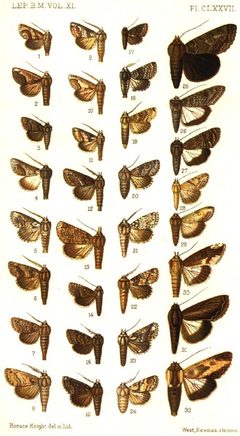
Identification of Paectes fuscescens requires examination of genitalic characters, as external wing patterns within the Paectes arcigera are highly similar and unreliable for distinguishing . Male and female genitalia show consistent diagnostic differences that separate this species from . The Paectes is characterized by typical euteliid with triangular forewings and a distinctive resting posture with often elevated.
Images
Distribution
Central America to Paraguay and Brazil; Antilles. GBIF records confirm presence in Brazil (Rio de Janeiro state) and Honduras.
Similar Taxa
- Paectes arcigera species complexMembers of this complex share highly similar wing patterns with P. fuscescens but differ in male and female genital ; proper identification requires dissection and examination of reproductive structures
More Details
Taxonomic history
Originally described as Edema fuscescens by Walker in 1855, later transferred to Paectes. The has been treated as a synonym in some classifications (Catalogue of Life) but is accepted as valid in GBIF and NCBI.
Related research context
Research on related Paectes in Brazil revealed a cryptic where six new species were discovered alongside two described species, all initially confused due to similar wing patterns. This highlights the importance of genitalic examination for accurate identification in this .