
Euproctis
Hübner, 1819
tussock moths
Species Guides
1- Euproctis chrysorrhoea(Brown-tail Moth)
Euproctis is a of tussock moths in the Erebidae, described by Jacob Hübner in 1819. The genus has distribution across the Palearctic, African, Oriental, and Australian regions. Molecular phylogenetic studies indicate the genus is , comprising numerous unrelated lineages that require taxonomic revision. Some are significant agricultural and forest pests, including Euproctis pseudoconspersa (tea tussock ) and Euproctis chrysorrhoea (brown-tail moth).
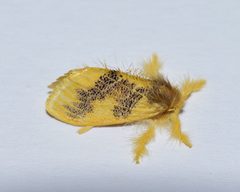
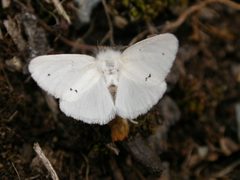
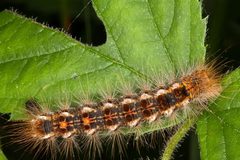
Pronunciation
How to pronounce Euproctis: //juːˈprɒktɪs//
These audio files are automatically generated. While they are not always 100% accurate, they are a good starting point.
Identification
Distinguished from related tussock by the combination of porrect palpi extending beyond the , bipectinate in both sexes with male branches bearing positioning spines, tibial spur formula (mid tibia: one pair; hind tibia: two pairs), and female anal tuft. The specific wing venation pattern, particularly the stalked 7-10 in the forewing with vein 10 given off toward the apex, provides additional diagnostic characters. Molecular data suggest the genus as currently defined is not monophyletic, so identifications based solely on may not reflect evolutionary relationships.
Images
Appearance
Palpi obliquely porrect, projecting forward beyond the . bipectinated in both sexes, with long branches in males each bearing a spine to maintain position relative to contiguous branches. Mid tibia with one pair of long spurs; hind tibia with two pairs. Females possess a large anal tuft. Forewing venation: 3, 4, and 5 arise from near the angle of the ; vein 6 from or below the upper angle; veins 7 to 10 stalked with vein 10 given off toward the apex. Hindwing venation: veins 3 and 4 stalked or from angle of cell; vein 5 from above angle; veins 6 and 7 stalked.
Habitat
varies by : Euproctis chrysorrhoea occurs in mixed oak forests; Euproctis pseudoconspersa is restricted to tea plantations. The as a whole occupies diverse environments across Palearctic, African, Oriental, and Australian regions.
Distribution
: widespread throughout Palearctic, African, Oriental, and Australian regions. Specific collection records include Denmark, Norway, and Sweden (GBIF). Euproctis chrysorrhoea collected from mixed oak forest near Prijepolje, southwestern Serbia. Euproctis pseudoconspersa distributed in China, Japan, and Korea.
Seasonality
Euproctis chrysorrhoea: masses collected in winter (February), stored at 4°C until late March, then transferred to laboratory conditions for development. No -wide seasonality data available.
Life Cycle
Euproctis chrysorrhoea: masses collected in winter, cold-stored, then hatch in spring; larvae develop through instars to fifth instar. Euproctis pseudoconspersa: -level indicates 23 chromosomes in females (including Z and W ), 22 in males. No complete description available for the .
Behavior
Euproctis chrysorrhoea larvae maintain direct contact with substrate and feed continuously. Euproctis pseudoconspersa communicate using Type III (10,14-dimethyl-pentadecyl isobutyrate and 14-methylpentadecyl isobutyrate). Some possess urticating setae.
Ecological Role
Several are significant herbivorous pests: Euproctis chrysorrhoea is a common forest pest feeding on deciduous tree leaves; Euproctis pseudoconspersa causes severe economic losses in tea production. Used as model organisms for studying ecotoxicological impacts of environmental pollutants on forest .
Human Relevance
Euproctis pseudoconspersa is a highly destructive pest of tea plantations in China, Japan, and Korea, causing severe yield and quality losses; chemical control threatens ecological health and resistance development. -based management offers an eco-friendly alternative. Urticating setae of some cause serious skin allergic reactions in humans. Euproctis chrysorrhoea is a forest pest of concern for oak-dominated .
Similar Taxa
- KidokugaFormerly included in Euproctis; separated based on molecular phylogenetic evidence showing Euproctis is .
- SphrageidusFormerly included in Euproctis; one of the few named lineages extracted from the Euproctis based on molecular data.
- LymantriaRelated tussock in Lymantriinae; Euproctis distinguished by porrect palpi, specific wing venation, and tibial spur formula.
More Details
Taxonomic Status
Molecular phylogenetic studies indicate Euproctis as presently defined comprises numerous unrelated lineages and is seriously in need of revision. Only a few lineages have been formally named (e.g., Kidokuga, Sphrageidus).
Genomic Resources
-level assembly available for Euproctis pseudoconspersa: 374.29 Mb, 23 chromosomes (female), 12,371 protein-coding genes, 33.86% repetitive sequences.
Sources and further reading
- BugGuide
- Wikipedia
- GBIF taxonomy match
- iNaturalist taxon
- NCBI Taxonomy
- Catalogue of Life
- Differences in Midgut Phosphatases Activity and Hemolymph Composition in Lymantria dispar and Euproctis chrysorrhoea Larvae Exposed to the Polycyclic Aromatic Hydrocarbon Fluoranthene.
- Chromosome level genome assembly of tea tussock moth, Euproctis pseudoconspersa.