
Renia fraternalis
Smith, 1895
Fraternal Renia Moth, fraternal renia
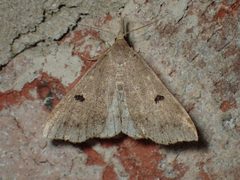
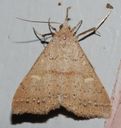
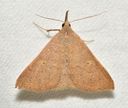
Renia fraternalis is a litter moth in the Erebidae, first described by J. B. Smith in 1895. It is a small with a wingspan of approximately 25 mm. The is distributed across eastern and central North America, with records from New York to Florida and westward to Oklahoma and Arkansas. It belongs to the Herminiinae, whose larvae are commonly associated with leaf litter and detritus.
Pronunciation
How to pronounce Renia fraternalis: /ˈriːniə frəˈtɜrnɑːlɪs/
These audio files are automatically generated. While they are not always 100% accurate, they are a good starting point.
Identification
The wingspan of approximately 25 mm distinguishes R. fraternalis from larger . Positive identification requires examination of genitalia or comparison with closely related Renia , which share similar muted coloration patterns typical of litter moths.
Images
Habitat
Associated with leaf litter and forest floor environments typical of litter moths in the Herminiinae.
Distribution
North America: recorded from New York, Oklahoma, Arkansas, South Carolina, and Florida. GBIF confirms presence in North America.
Seasonality
period includes dates documented in western New York studies, though specific months are not detailed in available sources.
Ecological Role
As a litter moth, likely contributes to decomposition processes through larval feeding on detritus, though this has not been directly documented for this .
Similar Taxa
- Other Renia speciesShare similar size range, muted coloration, and litter moth habits; require detailed examination for separation
More Details
Taxonomic placement
Classified in Herminiinae (litter moths) based on Catalogue of Life; this group was historically placed in Noctuidae but is now treated within Erebidae.
Data limitations
Despite 545 iNaturalist observations, published biological details remain sparse in the provided sources.