
Macristis
Schaus, 1916
Species Guides
3Macristis is a of litter moths within the Erebidae, described by Schaus in 1916. The genus comprises four recognized distributed in the Americas. These are classified in the Hypeninae, a group characterized by their association with leaf litter and detritus . Relatively little is known about the of most Macristis species.
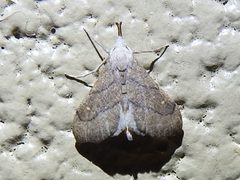
Pronunciation
How to pronounce Macristis: //məˈkrɪs.tɪs//
These audio files are automatically generated. While they are not always 100% accurate, they are a good starting point.
Identification
Macristis can be distinguished from related Hypeninae by genitalic characters, particularly in male specimens. External shows typical litter moth characteristics including relatively broad wings, subdued coloration, and a compact body form. Specific wing patterns vary among the four species; Macristis bilinealis has two distinct longitudinal lines on the forewings, while Macristis geminipunctalis and Macristis pharosalis are distinguished by paired spot patterns described in their original descriptions. Macristis schausi differs in wing pattern details from the other three species.
Images
Habitat
Litter moths in the Hypeninae, including Macristis, are associated with leaf litter, forest floor debris, and moist detritus-rich environments. Specific microhabitat preferences for individual Macristis have not been documented.
Distribution
The occurs in the Americas. Macristis bilinealis is known from the United States; Macristis geminipunctalis and Macristis pharosalis were described from South America (specific localities in original descriptions by Schaus); Macristis schausi occurs in Central America or the Caribbean region based on collection records.
Ecological Role
As litter moths, Macristis likely contribute to nutrient cycling in forest through larval feeding on decaying organic matter, though this has not been directly documented for the .
Human Relevance
No documented economic or medical importance. The is of interest primarily to lepidopterists and taxonomists studying Erebidae diversity.
Similar Taxa
- Other Hypeninae generaMacristis can be separated from related in the Hypeninae by male genitalic , particularly the structure of the valvae and . External characters alone are often insufficient for reliable identification.
More Details
Taxonomic history
The was established by William Schaus in 1916 with Macristis geminipunctalis as the type . Two additional species were described in the same publication. The genus has remained small and stable, with only one additional species added since the original description.
Etymology
The name derivation has not been explicitly stated in the original description, but may relate to Greek elements possibly referring to length or hairiness (macr- from makros, long), though this is speculative.