
Lascoria ambigualis
Walker, 1866
Ambiguous Moth
Lascoria ambigualis is a litter moth in the Herminiinae, first described by Francis Walker in 1866. are active from April through September, with two in Connecticut and multiple in Missouri. The exhibits in wing . Larvae feed on living plant material and have been successfully reared on dead leaves.

Pronunciation
How to pronounce Lascoria ambigualis: /læˈskoʊ.riə æmˈbɪɡ.juː.ælɪs/
These audio files are automatically generated. While they are not always 100% accurate, they are a good starting point.
Identification
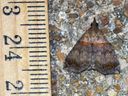
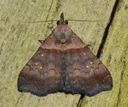
The combination of small size (21–25 mm wingspan), triangular resting posture with hindwings concealed, and the distinctive dark straight band dividing light upper and dark lower wing regions separates this from most similar herminiine . Male specimens are readily distinguished from females by the presence of a notch and associated black spot on the forewing margin. The variable forewing coloration (brown, purple-tinged, or gray) can cause confusion, but the consistent banding pattern and resting posture are diagnostic.
Images
Appearance
Small with wingspan of 21–25 mm. At rest, hindwings are tucked behind forewings, creating a triangular silhouette. Forewing coloration variable: brown, slightly purple, or shades of gray. A dark, straight transverse band crosses the wings, sharply dividing the light-colored and thoracic area from the darker lower wing portion. Males possess a notch on the wing edge with an associated black spot at the notch head; females lack these features.
Habitat
Occurs in shrubby fields, woodlands, and forests. Found across a wide variety of types, though most frequently observed in wooded and semi-open environments with shrubby vegetation.
Distribution
Eastern and central United States, ranging from Wisconsin to Maine, south to Florida and Texas. Present in Vermont.
Seasonality
active from April to September. Two per year in Connecticut; multiple in Missouri.
Diet
Larvae feed on Chrysanthemum , Aster species, blackberry (Rubus), and Verbesina species. Larvae have been reared successfully on dead leaves.
Host Associations
- Chrysanthemum - larval food plantliving foliage
- Aster - larval food plantliving foliage
- Rubus - larval food plantblackberry; living foliage
- Verbesina - larval food plantliving foliage
Life Cycle
to multivoltine . Two in northern part of range (Connecticut); multiple in southern part (Missouri). Larval stage feeds on living plant foliage and can develop on dead leaves. spans April through September.
Behavior
Rests with hindwings folded beneath forewings, producing a triangular profile. activity pattern typical of the group.
Ecological Role
Larval herbivore on composite plants and Rubus. Larvae capable of utilizing dead leaf material, suggesting potential detritivory or facultative saprophagy. Serves as prey for .
Human Relevance
No significant economic or medical importance. Occasionally encountered by naturalists and enthusiasts. Featured in regional caterpillar field guides.
Similar Taxa
- Other Lascoria speciesShare triangular resting posture and banded wing patterns; require examination of male genitalia or detailed wing markings for separation
- Herminiinae litter mothsSimilar size range and resting postures; L. ambigualis distinguished by the straight dark band and male-specific wing notch
More Details
Rearing notes
Larvae have been successfully maintained on dead leaves in captivity, indicating dietary flexibility beyond living plant tissue
Taxonomic history
Originally described as Gaberasa ambigualis by Walker in 1866; later transferred to Lascoria