
Bleptina verticalis
Troubridge, 2020
Bleptina verticalis is a of litter moth in the Erebidae, described by James T. Troubridge in 2020. It belongs to the Herminiinae, a group of commonly known as underwing or litter moths due to their typical resting posture with wings folded tent-like over the body. The species is part of a whose members are generally associated with moist, forested where their larvae feed on decaying plant matter. As a recently described species, detailed biological information remains limited.
Pronunciation
How to pronounce Bleptina verticalis: //ˈblɛptɪnə vərˈtɪkəlɪs//
These audio files are automatically generated. While they are not always 100% accurate, they are a good starting point.
Identification
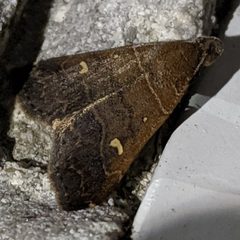
Bleptina verticalis can be distinguished from other Bleptina by the vertical orientation of specific wing markings, as suggested by its specific epithet. The Bleptina is characterized by relatively small to medium-sized with dull brown or gray forewings that often feature subtle transverse lines and a distinct spot. The hindwings are typically paler and more uniform. Accurate identification to species level within Bleptina generally requires examination of genitalia or reference to original species descriptions.
Images
Distribution
Bleptina verticalis has been recorded in North America. The precise geographic range is not well documented due to its recent description in 2020.
Similar Taxa
- Bleptina caradrinalisSimilar dull brown forewing coloration and overall size, distinguished by differences in wing pattern elements and genitalia structure
- Bleptina inferiorOverlaps in geographic range and general appearance; requires careful examination of wing markings and male genitalia for separation
- Other Herminiinae genera (e.g., Zanclognatha, Palthis)Similar resting posture and general body plan; Bleptina is distinguished by specific wing venation patterns and forewing shape