
Gondysia smithii
Guenée, 1852
Smith's Darkwing, Smith's Darkwing Moth
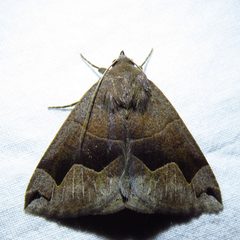
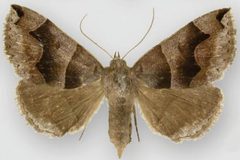
Gondysia smithii is a in the Erebidae, originally described as Ophiusa smithii by Achille Guenée in 1852. It occurs in open savanna and mesic woodland across the southeastern and south-central United States. The has multiple annually, with active from spring through late summer. It was transferred from Dysgonia to the newly erected Gondysia in 2010 based on morphological and molecular data.
Pronunciation
How to pronounce Gondysia smithii: /ɡɒnˈdɪziə ˈsmɪθiː/
These audio files are automatically generated. While they are not always 100% accurate, they are a good starting point.
Identification
Can be distinguished from related Dysgonia by genitalic and molecular markers that supported its transfer to Gondysia. The dark forewings and specific geographic range help separate it from other Erebinae in the region. Definitive identification requires examination of male genitalia or molecular analysis.
Images
Appearance
Wingspan measures 37–40 mm. possess dark forewings characteristic of the 'darkwing' . Detailed color pattern and body descriptions are not available in the provided sources.
Habitat
Open savanna and mesic woodland . Specific microhabitat preferences within these formations are not documented.
Distribution
Southeastern and south-central United States: North Carolina south to Georgia, west to Texas, and north in the Mississippi Valley to Missouri. Recently recorded from Virginia and Florida. Expected but not yet confirmed from Louisiana and Arkansas.
Seasonality
on wing from April to September. Multiple per year.
Life Cycle
Multiple annually. Specific details regarding , larval, and pupal stages are not documented in available sources.
Similar Taxa
- Dysgonia speciesFormerly classified in Dysgonia; separated based on genitalic and molecular characters
- Other Erebinae mothsShare dark forewing coloration; require genitalic or molecular examination for definitive separation
Sources and further reading
- BugGuide
- Wikipedia
- GBIF taxonomy match
- iNaturalist taxon
- NCBI Taxonomy
- Catalogue of Life
- Grasshoppers of Colorado
- Grasshoppers of Colorado
- Bembicid Holdings | Entomology Research Museum
- Grasshopper Collections and Survey
- When Mosquitoes Go to Bed for Winter, and How It Can Inform Management
- Another autumn oedipodine | Beetles In The Bush