
Doryodes reineckei
Lafontaine & Sullivan, 2015
A recently described in the Erebidae, known only from Spartina marshes along the US Gulf Coast from western Florida to eastern Texas. Described in 2015, it remains poorly known with only one iNaturalist observation recorded. The species is named in honor of USDA entomologist John P. Reinecke for his contributions to insect organ culture techniques and larval lepidopteran anatomy.
Pronunciation
How to pronounce Doryodes reineckei: //dɔˈɾi.oˌdes ˈɾaɪnɛki//
These audio files are automatically generated. While they are not always 100% accurate, they are a good starting point.
Identification
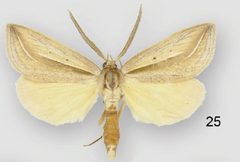
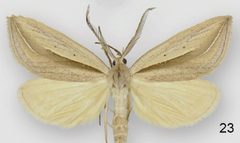
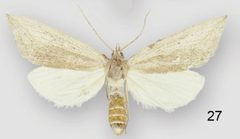
Distinguished from other Doryodes by the longitudinal forewing stripe that is paler and less sharply defined, with its lower margin blending into the ground color rather than forming a distinct boundary. The more rounded wing margin also separates it from . The combination of Spartina marsh and Gulf Coast distribution further supports identification.
Images
Appearance
Forewings pale brown to dark gray brown with darker forms appearing in colder months. Forewing length 15–17 mm in males, 17–20 mm in females. Distinguished by a longitudinal dark stripe that is paler and less sharply defined than in , with the lower margin blending gradually into the darker ground color below rather than forming a crisp edge. Wing margin more rounded than in other Doryodes .
Habitat
Exclusively associated with Spartina marshes—coastal salt marshes dominated by cordgrass (Spartina spp.).
Distribution
US Gulf Coast from the western panhandle of Florida eastward to eastern Texas.
Seasonality
recorded from April to August; likely active year-round given the mild coastal climate of its range.
Similar Taxa
- Other Doryodes speciesD. reineckei differs in having a paler, less sharply defined longitudinal forewing stripe with blended lower margin and more rounded wing margin.
More Details
Etymology
Named for John P. Reinecke, retired USDA entomologist who worked in Mississippi and developed insect organ culture techniques and detailed the anatomy of the of larval Lepidoptera.
Conservation status
Not evaluated; extremely limited observation data with only one iNaturalist record suggests it may be genuinely rare, overlooked, or restricted to inaccessible marsh .