
Catocala semirelicta
Grote, 1874
Semirelict Underwing Moth
Catocala semirelicta is a medium-sized underwing in the Erebidae, first described by Augustus Radcliffe Grote in 1874. Like other members of the Catocala, it possesses cryptic forewings that conceal brightly patterned hindwings, which are exposed when the moth is disturbed. The occurs across a broad North American range spanning from the Atlantic coast to the Pacific, with particular abundance in western mountainous regions.
Pronunciation
How to pronounce Catocala semirelicta: //kəˈtɒkələ ˌsemaɪˈrɛlɪktə//
These audio files are automatically generated. While they are not always 100% accurate, they are a good starting point.
Identification
Distinguished from other Catocala by geographic range and association with Populus and Salix plants in western North America. The specific hindwing pattern differs from related species, though precise diagnostic features require examination of specimens. C. s. hippolyta (sometimes treated as a distinct species) occurs in parts of the range.
Images
Appearance
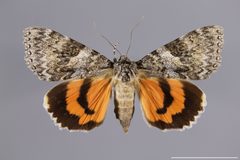
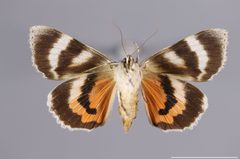
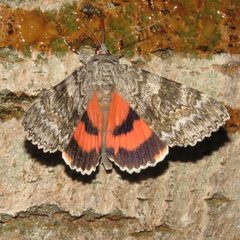
Forewings are mottled gray-brown, serving as camouflage against tree bark. Hindwings display bold contrasting patterns typical of underwing moths, though specific coloration details for this are not well documented in available sources. Wingspan measures 65–75 mm. Forewing length approximately 30 mm. Body is robust with a furry .
Habitat
Associated with riparian and montane forests where plants occur. Found in mixed conifer forests with oaks at elevations around 7,000 feet. Occupies from prairie wetlands with cottonwood groves to mountainous terrain.
Distribution
North America: Nevada, Colorado, Utah, California; east to Nova Scotia and Maine; west across Canada to British Columbia; southward in mountain ranges. Canadian provinces: Alberta, Manitoba, Saskatchewan. Also recorded in Vermont.
Seasonality
active July to September. Single per year, with timing varying by location.
Diet
Larvae feed on Populus balsamifera (balsam poplar), Populus tremuloides (quaking aspen), and Salix (willows). feeding habits not documented.
Host Associations
- Populus balsamifera - larval balsam poplar
- Populus tremuloides - larval quaking aspen
- Salix - larval willow
Life Cycle
Probably one per year. emerge mid-summer. Larval stage feeds on plant foliage. details not documented.
Behavior
are . Like other underwing moths, typically rests with forewings folded over , concealing hindwings. When disturbed, flashes brightly colored hindwings to startle before taking . Attracted to lights, though often remains on periphery of light stations rather than landing directly on sheets.
Ecological Role
Larval herbivore on poplar and willow . likely serves as prey for including bats and owls. Potential , though not documented.
Human Relevance
Subject of interest to lepidopterists and citizen scientists during National Week events. No economic significance documented. Not known to be a pest .
Similar Taxa
- Catocala hippolytaSometimes treated as C. s. hippolyta; relationship disputed
- Other Catocala speciesShare cryptic forewing and colorful hindwing pattern; distinguished by specific hindwing markings and geographic distribution
More Details
Taxonomic Notes
Two recognized: C. s. semirelicta (Grote, 1874) and C. s. hippolyta (Strecker, 1874). The latter has been treated as a distinct by some authorities.
Research Needs
Basic details including , larval, and pupal descriptions are poorly documented. Specific hindwing coloration and pattern require better documentation in published sources.
Sources and further reading
- BugGuide
- Wikipedia
- GBIF taxonomy match
- iNaturalist taxon
- NCBI Taxonomy
- Catalogue of Life
- A Gathering of Lepidopterists: Who's Who of the Butterfly, Moth Experts | Bug Squad
- Got Moths? Celebrate National Moth Week and Global Citizen Science
- Bug Eric: National Moth Week Recap, 2015
- Bug Eric: National Moth Week Recap for Colorado Springs
- Bug Eric: National Moth Week 2024 Recap from Kansas City
- Bug Eric: New Mexico Night Bugs