
Catocala blandula
Hulst, 1884
Charming Underwing
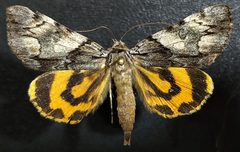
Catocala blandula, the charming underwing, is a in the Erebidae first described by George Duryea Hulst in 1884. The is distributed across northern North America, from Nova Scotia west to central Alberta and south to Pennsylvania and Wisconsin. have a wingspan of 42–50 mm and are active from July to September. The larvae feed on Amelanchier, Malus sylvestris, and Crataegus.
Pronunciation
How to pronounce Catocala blandula: /ˌkæ.təˈkeɪ.lə ˈblæn.djʊ.lə/
These audio files are automatically generated. While they are not always 100% accurate, they are a good starting point.
Identification
Distinguished from other Catocala by geographic range and association with specific larval plants (Amelanchier, Malus sylvestris, Crataegus). Forewing pattern and hindwing coloration differ from related species. The former C. blandula manitobensis is now considered a synonym.
Images
Appearance
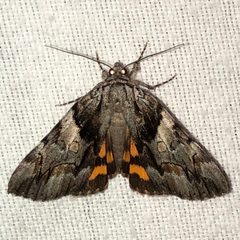
have a wingspan of 42–50 mm. Like other underwing moths, the forewings are dull-colored and serve as camouflage when at rest, concealing the more brightly patterned hindwings beneath.
Habitat
Associated with supporting its larval plants: Amelanchier (serviceberry), Malus sylvestris (wild apple), and Crataegus (hawthorn). These are typically woodland edges, orchards, and shrubby areas.
Distribution
North America: Nova Scotia west to central Alberta, south to Pennsylvania and Wisconsin. Records from Alberta, Manitoba, Saskatchewan, and Vermont.
Seasonality
are on wing from July to September, with timing varying by location.
Diet
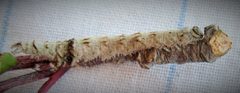
Larvae feed on Amelanchier, Malus sylvestris, and Crataegus. feeding habits are not documented in the provided sources.
Host Associations
- Amelanchier - larval food plantserviceberry
- Malus sylvestris - larval food plantwild apple
- Crataegus - larval food planthawthorn
Life Cycle
Complete with , larva, pupa, and stages. Larval stage feeds on plants. Adults emerge July–September. Specific details of site and stage are not documented in provided sources.
Behavior
Like other underwing moths, typically rest with forewings held together over the back, concealing the hindwings. When disturbed, they may flash the brightly colored hindwings as a startle defense before taking . Underwing moths generally do not come readily to lights or remain on the periphery of lighted areas.
Ecological Role
Larvae are herbivores feeding on woody shrubs and trees. likely serve as prey for including bats and birds. Specific ecological interactions are not well documented.
Human Relevance
Subject of interest to lepidopterists and enthusiasts. Participates in National Moth Week citizen science events. No documented economic importance.
Similar Taxa
- Other Catocala speciesShare the underwing with dull forewings concealing colorful hindwings; distinguished by specific forewing patterns, hindwing colors, and geographic range
More Details
Taxonomic history
The Catocala blandula manitobensis, described from Manitoba, is now considered a synonym of C. blandula.
Sources and further reading
- BugGuide
- Wikipedia
- GBIF taxonomy match
- iNaturalist taxon
- NCBI Taxonomy
- Catalogue of Life
- A Gathering of Lepidopterists: Who's Who of the Butterfly, Moth Experts | Bug Squad
- Got Moths? Celebrate National Moth Week and Global Citizen Science
- Bug Eric: National Moth Week Recap, 2015
- Bug Eric: National Moth Week Recap for Colorado Springs
- Bug Eric: National Moth Week 2024 Recap from Kansas City
- Bug Eric: New Mexico Night Bugs