
Lycomorpha regulus
(Grinnell, 1903)
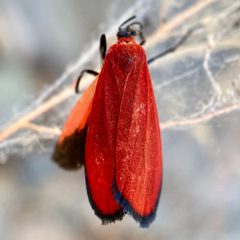
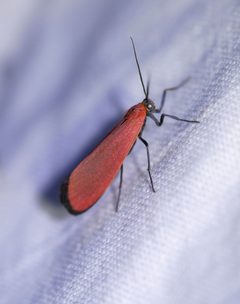
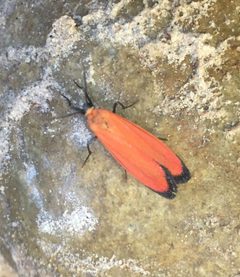
Lycomorpha regulus is a North American in the Erebidae, first described by Fordyce Grinnell Jr. in 1903. It belongs to a mimicry complex involving net-winged beetles (family Lycidae), sharing their characteristic black and orange warning coloration. The larvae feed specifically on lichens of the Parmelia.
Pronunciation
How to pronounce Lycomorpha regulus: /ˌlaɪkɔˈmɔrfə ˈrɛɡjələs/
These audio files are automatically generated. While they are not always 100% accurate, they are a good starting point.
Images
Distribution
Found in western North America, specifically recorded in Arizona, California, Colorado, and Utah.
Diet
Larvae feed on lichens of the Parmelia, including Parmelia plittii.
Host Associations
- Parmelia plittii - larval food sourcelichen
- Parmelia - larval food sourcelichen
Ecological Role
Participates in a Müllerian mimicry complex with net-winged beetles ( Lycidae), where multiple unpalatable share similar warning coloration to reinforce avoidance.
Similar Taxa
- Lycomorpha pholusSimilar black-and-yellow lichen appearance; distinguished by (L. pholus appear later in late summer) and potentially wing pattern details
- Pyromorpha dimidiataUnrelated in Zygaenidae that shares similar black and orange coloration and participates in the same net-winged beetle mimicry complex; distinguished by black hind margin of forewing and different
More Details
Mimicry Complex
Like other Lycomorpha , L. regulus participates in a mimicry ring with net-winged beetles (Lycidae). The black and orange or red warning coloration signals unpalatability to . This appears to be Müllerian mimicry, where both the beetles and are noxious or toxic.
Taxonomic History
Originally described as Anatolmis regulus by Grinnell in 1903, later transferred to Lycomorpha. The genus Lycomorpha is placed in tribe Lithosiini within Arctiinae of Erebidae.