
Hypoprepia fucosa
Hübner, 1831
Painted Lichen Moth
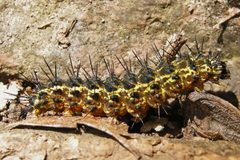
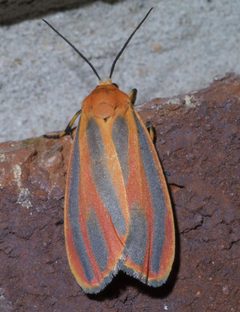
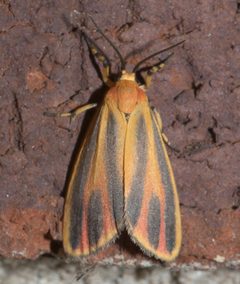
A small to medium-sized in the Erebidae, described by Jacob Hübner in 1831. display distinctive wing patterns and are active primarily during summer months in northern . The occupies a broad geographic range across eastern North America, with larvae specializing on cryptogamic growths on tree bark.
Pronunciation
How to pronounce Hypoprepia fucosa: /haɪpoʊˈprɛpiə fjuːˈkoʊsə/
These audio files are automatically generated. While they are not always 100% accurate, they are a good starting point.
Identification
Distinguished from similar lithosiine by the specific pattern of forewing markings and geographic range. The combination of size, wing pattern, and association with lichen-feeding larvae helps separate it from related Hypoprepia . H. f. tricolor exhibits more pronounced tricolor patterning.
Images
Habitat
Forested and wooded areas where trees support growth of lichens, , and moss. Found in both deciduous and mixed forest types. Larval microhabitat is specifically the bark surface of living trees.
Distribution
Eastern North America east of the Rocky Mountains; recorded from United States and southern Canada including Alberta, Manitoba, and Saskatchewan. Absent from western North America.
Seasonality
active May to August in northern portions of range; potentially year-round in Florida. Multivoltine in southern areas, likely or in northern areas.
Diet
Larvae feed on lichen, , and moss growing on tree bark. feeding habits not documented.
Host Associations
- Lichen - larval food sourcePrimary diet component
- Algae - larval food sourceSecondary diet component
- Moss - larval food sourceTertiary diet component
Life Cycle
Complete with , larva, pupa, and stages. Larval stage specialized for grazing on cryptogamic growths. Specific duration of developmental stages not documented.
Behavior
activity. Larvae are external feeders on tree bark, moving slowly while grazing. site not specified in available sources.
Ecological Role
Larvae function as primary consumers of epiphytic cryptogams, potentially influencing lichen composition on tree bark. May serve as prey for insectivorous birds, bats, and other arthropods.
Human Relevance
No documented economic importance. Occasionally encountered by naturalists and enthusiasts. Scientifically notable as a well-documented lichen-feeding .
Similar Taxa
- Hypoprepia miniataSimilar member with overlapping range; distinguished by coloration and pattern details
- Other LithosiiniMany share lichen-feeding ; identification requires examination of wing pattern and genitalia
More Details
Subspecies
Two named : H. f. subornata and H. f. tricolor
Nomenclature
Original description by Hübner in 1831; Hodges number 8090 in North American checklists