
Cisthene subjecta
Walker, 1854
Subject Lichen Moth
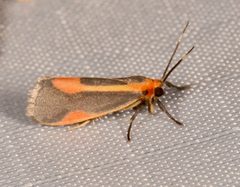
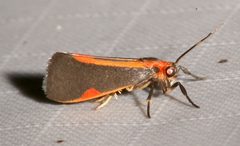
Cisthene subjecta, commonly known as the subject lichen , is a small tiger moth in the Erebidae. It was first described by Francis Walker in 1854. The is to the southeastern United States and is active year-round as an . With a wingspan of approximately 12 mm, it belongs to a whose members have been documented to produce acoustic warning signals to deter bat .
Pronunciation
How to pronounce Cisthene subjecta: //ˈsɪs.θə.ni ˈsʌbˌdʒɛk.tə//
These audio files are automatically generated. While they are not always 100% accurate, they are a good starting point.
Identification
The small size (12 mm wingspan) and southeastern U.S. distribution help distinguish this from similar Cisthene species. Specific diagnostic features for separating C. subjecta from are not documented in the provided sources.
Images
Appearance
Small with a wingspan of approximately 12 mm. As a member of the Lithosiini tribe (lichen moths), it likely exhibits cryptic coloration typical of the group, though specific pattern details for this are not documented in the provided sources.
Habitat
Specific preferences are not documented. As a lichen (tribe Lithosiini), association with lichen-covered substrates is plausible but not confirmed for this .
Distribution
Southeastern United States. Documented from Alabama, Florida, Georgia, Indiana, Kentucky, Maryland, Mississippi, North Carolina, Oklahoma, South Carolina, Tennessee, and Texas.
Seasonality
have been recorded on wing year round; no specific peak activity period documented.
Behavior
Specific for this are not documented. Related Cisthene species have been observed to exhibit reduced evasive responses to bat , possibly relying on acoustic warning signals instead.
Similar Taxa
- Cisthene martiniCongeneric in the same ; studied for acoustic aposematism against bats, which may be shared within the genus.
- Other Cisthene speciesMultiple similar small lichen moths in the southeastern U.S.; specific distinguishing characters not provided in sources.
More Details
Acoustic aposematism in related species
While not specifically documented for C. subjecta, research on the congeneric Cisthene martini has demonstrated acoustic aposematism—ultrasonic warning signals produced to deter bat . This may be present in other Cisthene , including C. subjecta, given shared evolutionary history within the .