
Cisthene barnesii
(Dyar, 1904)
Barnes' Lichen Moth
Cisthene barnesii is a small lichen in the Erebidae, described by Harrison Gray Dyar Jr. in 1904. The is to the Rocky Mountain region of the United States, where it inhabits dry bunchgrass steppe. are active during mid-summer, with forewings measuring 11–12 mm. The species is named in honor of entomologist William Barnes.
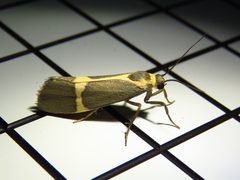
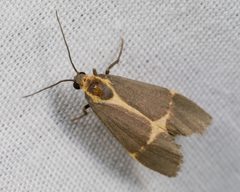
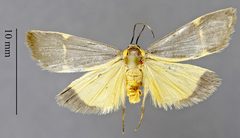
Pronunciation
How to pronounce Cisthene barnesii: //ˈsɪsθəni ˈbɑrnɛsii//
These audio files are automatically generated. While they are not always 100% accurate, they are a good starting point.
Identification
Forewing length of 11–12 mm distinguishes C. barnesii from larger . The occurs in the Rocky Mountain region during mid-July to late August, which may aid in separation from sympatric Cisthene species with different periods. Specific diagnostic characters require examination of genitalia or detailed wing pattern analysis not available in cited sources.
Images
Appearance
Small with forewings 11–12 mm in length. As a member of the lichen moth tribe Lithosiini, likely exhibit muted coloration typical of the group, though specific pattern details for this are not documented in available sources.
Habitat
Dry bunchgrass steppe in the Rocky Mountain region. This semi-arid grassland is characterized by sparse vegetation and open terrain.
Distribution
United States Rocky Mountain region, from southern Montana and western North Dakota southward to the border with Mexico in Arizona and New Mexico.
Seasonality
active from mid-July to late August. Single-brooded with a narrow seasonal window.
Human Relevance
Named after American entomologist William Barnes (1860–1936), who made substantial contributions to North American lepidopterology. No other documented human interactions.
Similar Taxa
- Other Cisthene speciesSympatric in the Rocky Mountain region; separation requires detailed morphological examination or geographic and phenological data
More Details
Etymology
Specific epithet honors William Barnes, prominent American entomologist and co-author of standard works on North American .