
Seirarctia
Packard, 1864
echo moth
Species Guides
1- Seirarctia echo(Echo Moth)
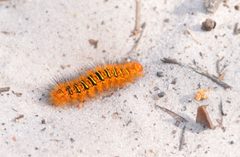
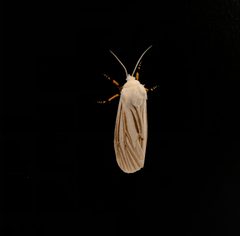
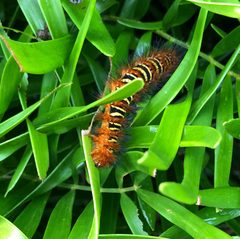
Seirarctia is a in the Erebidae, Arctiinae, established by Alpheus Spring Packard in 1864. The genus contains a single , Seirarctia echo (the echo moth), described by James Edward Smith in 1797. The species is to the southeastern United States and is known for its caterpillars, which have become locally famous at Stetson University in Florida.
Pronunciation
How to pronounce Seirarctia: /ˌsaɪrəˈrktiə/
These audio files are automatically generated. While they are not always 100% accurate, they are a good starting point.
Images
Habitat
Thickets, scrubwoods, and open areas. The has been documented in campus environments where suitable vegetation is present.
Distribution
Southeastern United States: Georgia, Florida, Alabama, and Mississippi.
Seasonality
and caterpillars have been observed in summer, fall, and late spring at documented locations.
Diet
Larvae feed on various woody plants including coontie (Zamia integrifolia), cabbage palmetto (Sabal palmetto), crotons, lupine, oak, and persimmon. feeding habits are not documented.
Host Associations
- Zamia integrifolia - larval food plantcoontie
- Sabal palmetto - larval food plantcabbage palmetto
- Croton - larval food plant level
- Lupinus - larval food plantlupine, level
- Quercus - larval food plantoak, level
- Diospyros - larval food plantpersimmon, level
Behavior
Caterpillars are frequently observed in open campus environments during warm months. are less frequently encountered than larvae.
Human Relevance
At Stetson University's DeLand, Florida campus, caterpillars are commonly seen and colloquially referred to as "Hatterpillars" in reference to the university's mascot (the Hatters). The has become a recognizable part of local campus .
More Details
Taxonomic history
Originally described in the ; now classified in Erebidae following molecular phylogenetic revisions of Lepidoptera.
Local cultural significance
The 'Hatterpillar' nickname at Stetson University represents a rare example of a achieving local recognition and informal naming by a human .