
Euchaetes bolteri
Stretch, 1885
Euchaetes bolteri is a in the Erebidae, described by Richard Harper Stretch in 1885. It ranges from the southwestern United States (Texas and New Mexico) through Mexico to Rica. are active from late March to May. The species belongs to a whose members are commonly known as tiger moths, though specific details about this species' remain limited.
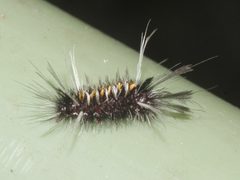
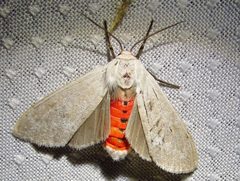
Pronunciation
How to pronounce Euchaetes bolteri: //juːˈkeɪtiːz ˈbɒltəri//
These audio files are automatically generated. While they are not always 100% accurate, they are a good starting point.
Images
Distribution
Found from the southwestern United States (Texas and New Mexico) south through Mexico to Rica.
Seasonality
have been recorded on wing from late March to May.
More Details
Taxonomic note
Euchaetes bolteri was described by Richard Harper Stretch in 1885. The Euchaetes is classified within the Arctiinae of Erebidae. Many Euchaetes are associated with milkweed plants (Asclepias), though this specific association has not been documented for E. bolteri.
Data limitations
Most available information pertains to , particularly Euchaetes egle (milkweed tiger moth). The sources provided do not contain -specific details about E. bolteri's appearance, larval plants, or ecological relationships.
Sources and further reading
- BugGuide
- Wikipedia
- GBIF taxonomy match
- iNaturalist taxon
- NCBI Taxonomy
- Catalogue of Life
- Bugs in orange and black - Monarch butterfly, Danaus plexippus Milkweed Bug - Oncopeltus fasciatus; Milkweed tiger moth, Euchaetes egle — Bug of the Week
- Bugs in Orange and Black: Monarch Butterfly, Milkweed Leaf Beetle, Milkweed Bug, and Milkweed Tiger Moth — Bug of the Week
- Bug in orange and black: Milkweed tussock moth, Euchaetes egle, and its caterpillars have tricks but no treats for hungry predators — Bug of the Week
- The other monarch caterpillar: Milkweed tussock moth, Euchaetes egle — Bug of the Week
- Save some milkweed for me! Monarchs and the milkweed tussock moth, Euchaetes egle — Bug of the Week
- Bug Eric: Results of the Red Rock Canyon Open Space Bioblitz