
Bertholdia trigona
Grote, 1879
Grote's bertholdia
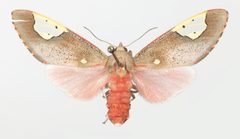
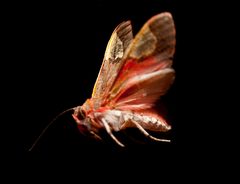
Bertholdia trigona, commonly known as Grote's bertholdia, is a in the Erebidae, first described by Augustus Radcliffe Grote in 1879. It is prevalent in the southwestern United States. This species has been documented as one of the few moths capable of actively disrupting bat echolocation through the production of high-frequency clicks.
Pronunciation
How to pronounce Bertholdia trigona: /bɛrˈθɔldiə trɪˈɡoʊnə/
These audio files are automatically generated. While they are not always 100% accurate, they are a good starting point.
Images
Distribution
Southwestern United States; North America
Behavior
Bertholdia trigona has been demonstrated to jam bat echolocation, producing clicks at the highest recorded rate of any studied. This acoustic defense is hypothesized to increase the effectiveness of jamming against predatory bats.
More Details
Echolocation Jamming Research
Studies conducted at Wake Forest University documented this ' ability to disrupt bat echolocation, representing one of the most sophisticated known anti- defenses in .
Sources and further reading
- BugGuide
- Wikipedia
- GBIF taxonomy match
- iNaturalist taxon
- NCBI Taxonomy
- Catalogue of Life
- Eavesdropping Bees Encouraged by "Whispers," Deterred by "Shouts"
- How to Become a Vulture: Tropical Bees and Their Gut Microbes
- Bananas in Belize get some help from stingless bees: Stingless bees, tribe Meliponini — Bug of the Week
- Typocerus deceptus in Missouri | Beetles In The Bush