
Lymire
Walker, 1854
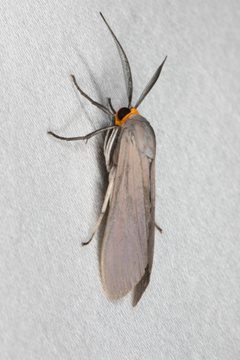
Edwards' wasp moth (Lymire edwardsii)
Species Guides
1- Lymire edwardsii(Edwards' Wasp Moth)
Lymire is a of tiger moths in the Erebidae, erected by Francis Walker in 1854. The genus contains approximately 13 described distributed primarily in the Americas. The most well-documented species, Lymire edwardsii (Edwards' ), is known as a significant pest of Ficus trees in Florida. Most species in this genus remain poorly studied with limited biological data available.

Pronunciation
How to pronounce Lymire: //ˈlɪmaɪər//
These audio files are automatically generated. While they are not always 100% accurate, they are a good starting point.
Identification
Members of Lymire can be distinguished from related tiger moth by genitalic and wing venation patterns, though specific diagnostic characters vary by . Lymire edwardsii exhibits -mimicking coloration with transparent wings and a slender body, a trait that may extend to other . Accurate identification to species level typically requires examination of male genitalia and reference to original descriptions.
Images
Distribution
The is distributed in the Neotropical and Nearctic regions, with records from North America, Central America, and South America. Lymire edwardsii has been documented in the Lake Worth, Florida area. Specific distributions for most other are poorly documented beyond type localities.
Diet
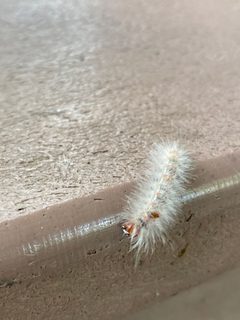
Larvae of Lymire edwardsii feed on Ficus trees, including rubber trees (Ficus spp.). Dietary habits for other in the are unknown.
Host Associations
- Ficus - larval Primary for Lymire edwardsii; includes rubber trees and other Ficus
- Ficus elastica - larval Rubber tree; historical association noted by Bratley (1929)
Ecological Role
Lymire edwardsii acts as a folivorous pest in urban and agricultural settings where Ficus trees are cultivated, causing extensive defoliation. The ecological roles of other in the are undocumented.
Human Relevance
Lymire edwardsii is of economic concern as a pest of ornamental and commercial Ficus plantings in Florida. Control measures have been studied in the Lake Worth area since at least 1959. No other in the are documented as having significant human impact.
Similar Taxa
- SyntomeidaBoth contain -mimicking tiger moths with transparent wing areas; distinguished by genitalic and specific wing pattern elements
- CtenuchaRelated tiger moths in the same ; Lymire generally lack the metallic blue or green coloration common in Ctenucha
- Euchromia-mimicking with similar overall appearance; Euchromia is primarily Old World in distribution while Lymire is New World
More Details
Taxonomic history
The was originally placed in (now Arctiinae within Erebidae). The subfamily Ctenuchinae, sometimes used for this group, is not recognized in all modern classifications.
Research gaps
and stages are documented only for L. edwardsii (Edwards 1887, Dyar 1890, Genung 1959). The remaining 12 lack published data.