
Stigmella saginella
(Clemens, 1861) Wilkinson et al., 1979
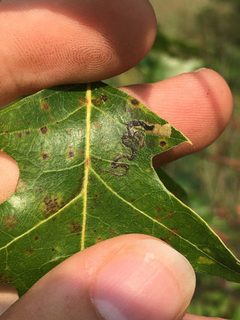
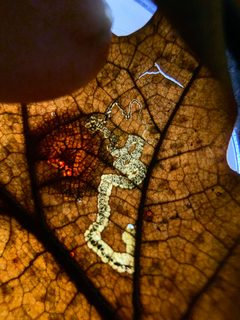
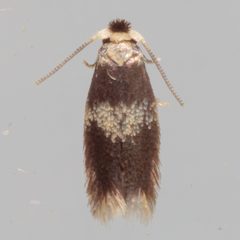
Stigmella saginella is a minute in the Nepticulidae, commonly known as pygmy moths or microlepidoptera. The is native to North America and has been documented across a broad geographic range spanning the eastern United States, parts of the Midwest, California, and southeastern Canada. Larvae are leaf miners that feed exclusively on oak species (Quercus), creating distinctive tunnels within leaf tissue.
Pronunciation
How to pronounce Stigmella saginella: //ˈstɪɡmɛlə sædʒɪˈnɛlə//
These audio files are automatically generated. While they are not always 100% accurate, they are a good starting point.
Identification
Identification to level requires examination of genitalia or , as is standard for Nepticulidae. The larval leaf mines on oak leaves may provide a field indicator, though these must be distinguished from mines of other Stigmella species and related leaf-mining . The known association with Quercus species helps narrow identification possibilities in regions where multiple Stigmella species occur.
Images
Habitat
Associated with oak-dominated , including deciduous forests, woodlands, and urban or suburban areas where oak trees are present. The ' distribution across diverse regions from the northeastern United States to California suggests adaptability to varied climatic conditions within the range of suitable plants.
Distribution
Documented in the Nearctic region: United States (Ohio, New York, Virginia, Massachusetts, Illinois, Missouri, Pennsylvania, Kentucky, California) and Canada (Ontario, Quebec). Vermont is also indicated in distribution records.
Diet
Larvae feed on Quercus , specifically documented on Q. prinus (chestnut oak), Q. platanoides (synonym for Q. rubra, northern red oak), and Q. alba (white oak). Larvae are leaf miners, feeding between the upper and lower of oak leaves.
Host Associations
- Quercus prinus - larval plantchestnut oak
- Quercus platanoides - larval plantnorthern red oak (synonym for Q. rubra)
- Quercus alba - larval plantwhite oak
Life Cycle
Larval stage develops within oak leaves as a , creating serpentine or blotch mines depending on developmental stage. likely occurs in soil or leaf litter, as is typical for the , though this has not been explicitly documented for this .
Behavior
are presumably or , as is typical for Nepticulidae. Larval mining is confined to the leaves of oaks.
Ecological Role
As a on oaks, larvae contribute to the herbivore of these forest trees. The is part of a broader guild of insects that process oak leaf , with potential effects on nutrient cycling and as a food source for and .
Human Relevance
No direct economic or agricultural significance. The may be encountered by arborists, foresters, or naturalists examining oak foliage. Like other microlepidoptera, it contributes to biodiversity documentation and may serve as an indicator of oak quality.
Similar Taxa
- Other Stigmella speciesNumerous occur in North America, many also associated with oaks or other Fagaceae. Accurate identification requires microscopic examination or genetic analysis.
- Other NepticulidaeThe contains many minute, morphologically similar . plant association and genitalia are primary distinguishing features.
More Details
Taxonomic history
Originally described by Clemens in 1861 and later recombined by Wilkinson et al. in 1979.