
Lasiocampini
Genus Guides
5- Caloecia
- Dicogaster
- Gloveria
- Malacosoma(Tent Caterpillar Moths)
- Quadrina
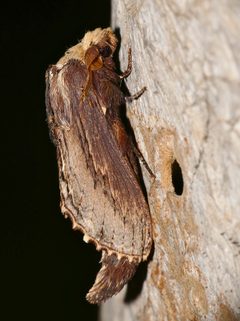
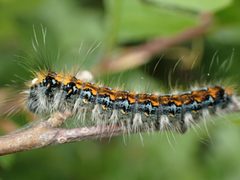
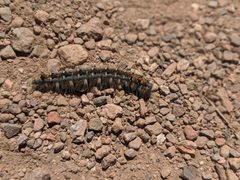
Lasiocampini is a tribe of lappet moths within the Lasiocampidae. Members are characterized by densely hairy bodies and larvae with fleshy, lobe-like projections (lappets) along the body sides. The tribe includes several of medium to large-sized found primarily in the Northern Hemisphere. are generally and possess reduced mouthparts, with larvae feeding on various woody plants.
Pronunciation
How to pronounce Lasiocampini: /ˌlæsiˌoʊˈkæmpɪnaɪ/
These audio files are automatically generated. While they are not always 100% accurate, they are a good starting point.
Identification
Distinguished from other Lasiocampidae tribes by the combination of: dense body hair in , bipectinate male , and larvae with well-developed lateral lappets. The *Lasiocampa* is the type genus and most commonly encountered representative. Similar to Malacosini but generally with more pronounced body hair and different wing venation patterns. Separation from other tribes requires examination of genitalic structures and wing venation.
Images
Habitat
Primarily associated with temperate and forests, woodlands, and shrublands. Found in both deciduous and coniferous depending on . Larvae require woody plants for development.
Distribution
Holarctic distribution, with primary diversity in the Palearctic region. Extends across Europe, Asia, and North America. Some reach into North Africa and the Middle East.
Seasonality
are active primarily in late spring through summer, varying by latitude and elevation. Most have a single per year (), with adults emerging in response to temperature and cues.
Diet
Larvae feed on leaves of various woody plants including oaks (*Quercus*), willows (*Salix*), birches (*Betula*), and conifers such as pines (*Pinus*). Specific associations vary by .
Host Associations
- Quercus - larval food plantmultiple
- Salix - larval food plantmultiple
- Betula - larval food plantmultiple
- Pinus - larval food plantconifer-feeding
Life Cycle
are laid in masses on plant branches or twigs. Larvae feed gregariously in early instars, becoming solitary later. Full-grown larvae spin dense silken cocoons, often attached to branches or fallen to ground. occurs as pupae within cocoons. emerge the following season, with some exhibiting extended .
Behavior
Larvae are known for their distinctive looping gait and defensive wriggling when disturbed. Early instar larvae often feed in groups, producing silken webbing. do not feed; they are and attracted to light. Females release to attract males, which have elaborate feathery for detection.
Ecological Role
Larvae function as folivores in forest , with occasional causing localized defoliation. Cocoons provide microhabitat for various . serve as prey for bats and birds.
Human Relevance
Some are occasional forest pests during years, though generally of minor economic importance. The dense, hairy larvae can cause (skin irritation) in sensitive individuals. Cocoons have been used historically for silk production in some regions.
Similar Taxa
- MalacosiniAnother tribe within Lasiocampidae; distinguished by less dense body hair, different larval setal patterns, and distinct wing venation
- GastropachiniRelated tribe with slug-like larvae lacking prominent lateral lappets; have different wing shape and venation
More Details
Taxonomic note
The tribe Lasiocampini has undergone several revisions; current circumscription includes such as *Lasiocampa*, *Eriogaster*, and *Dendrolimus* in some treatments, though boundaries remain under study.
Cocoon structure
The dense, silken cocoons are among the toughest in Lepidoptera, providing excellent protection against and environmental extremes. This trait has enabled some to colonize harsh climates.