
Gazoryctra roseicaput
(Neumoegen & Dyar, 1893)
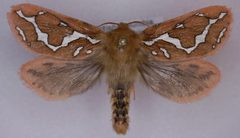
Gazoryctra roseicaput is a hepialid described in 1893 from western North American mountain regions. are medium-small with distinctive dull red-brown forewings marked by silvery-white spots. The has a narrow seasonal period in late summer.
Pronunciation
How to pronounce Gazoryctra roseicaput: /ɡæzəˈɹɪktrə roʊˌzaɪˈkæpət/
These audio files are automatically generated. While they are not always 100% accurate, they are a good starting point.
Identification
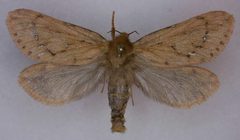
The combination of small size (wingspan ~32 mm), dull red-brown forewings with silvery-white spotting, and plain unmarked hindwings distinguishes this from other Gazoryctra. The late August period in montane western North America provides additional context for identification.
Images
Appearance
have a wingspan of approximately 32 mm. Forewings are dull red-brown with scattered silvery-white spots. Hindwings are plain and unmarked. The overall coloration is muted and earthy.
Habitat
Montane environments in western North America, including mountainous regions of Washington, Oregon, British Columbia, and Alberta. Specific microhabitat preferences are not documented.
Distribution
Mountains of western North America: Washington, Oregon, British Columbia, and Alberta.
Seasonality
are active in the last half of August. period is brief and late-season.
Similar Taxa
- Other Gazoryctra speciesGazoryctra roseicaput is distinguished by its specific wing pattern (silvery-white spots on dull red-brown forewings) and small size relative to ; precise differentiation requires examination of genitalia or reference to geographic and seasonal occurrence
More Details
Taxonomic history
Described by Berthold Neumoegen and Harrison Gray Dyar Jr. in 1893.