
Phyllonorycter quercialbella
(Fitch, 1859)
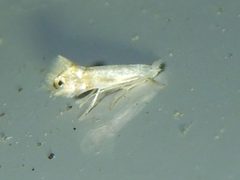
Phyllonorycter quercialbella is a minute leaf-mining in the Gracillariidae. have a wingspan of approximately 7 mm. The is restricted to eastern North America, where larvae feed as leaf miners on several oak species. It was first described by Fitch in 1859.
Pronunciation
How to pronounce Phyllonorycter quercialbella: /ˌfɪl.oʊ.nəˈɹɪk.tɚ ˌkwɜːr.si.əlˈbɛl.ə/
These audio files are automatically generated. While they are not always 100% accurate, they are a good starting point.
Identification
The extremely small size (7 mm wingspan) and association with oak help distinguish this from larger . Within Phyllonorycter, species identification typically requires examination of genitalia or larval host and mine characteristics. The specific epithet "quercialbella" references Quercus alba, its primary host. Similar Phyllonorycter species on oaks may be distinguished by mine and exact host association.
Images
Habitat
Associated with oak woodlands and forests where Quercus occur. Larval is within leaves of host oaks.
Distribution
Eastern North America: Canada (Québec) and the United States (Illinois, New York, Kentucky, and other eastern states).
Diet
Larvae feed on Quercus , specifically Quercus alba (white oak), Quercus macrocarpa (bur oak), Quercus nigra (water oak), and Quercus velutina (black oak). They mine the leaves of their plants. feeding habits are not documented.
Host Associations
- Quercus alba - larval primary referenced in specific epithet
- Quercus macrocarpa - larval
- Quercus nigra - larval
- Quercus velutina - larval
Life Cycle
Larvae are leaf miners, feeding internally within oak leaves. Specific details of , number of per year, and stage are not documented in available sources.
Behavior
Larvae create leaf mines in oak foliage. are and have been observed at blacklight.
Ecological Role
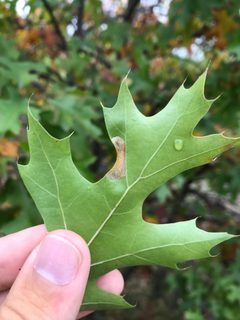
As a , larvae feed on living oak leaf tissue between the epidermal layers. This feeding strategy creates distinctive blotches or tunnels visible on leaf surfaces. The contributes to the diverse of herbivores associated with oak .
Human Relevance
No documented economic or medical significance. The is not considered a pest of ornamental or timber oaks.
Similar Taxa
- Other Phyllonorycter speciesMany Phyllonorycter are similarly minute and create leaf mines on oaks or related plants. Identification to species level typically requires dissection and examination of genitalia or detailed analysis of larval mine patterns and associations.
- Other Gracillariidae leaf minersMultiple within Gracillariidae contain leaf-mining on oaks. These may be distinguished by mine type (blotch vs. serpentine), larval , and genitalia.
More Details
Taxonomic note
The specific epithet "quercialbella" is a compound referencing Quercus (oak) and alba (white), indicating the historical association with white oak as a primary .