
Leucanthiza amphicarpeaefoliella
Clemens, 1859
Leucanthiza amphicarpeaefoliella is a minute leaf-mining in the Gracillariidae, described by Clemens in 1859. The occurs in northeastern North America, with records from Ontario and Québec in Canada and several eastern and midwestern U.S. states. are small with a wingspan of approximately 8 mm. The larvae are specialized leaf miners on Amphicarpaea bracteata, a leguminous vine.
Pronunciation
How to pronounce Leucanthiza amphicarpeaefoliella: //luːˌkænˈθaɪzə æmˌfɪkɑːˌpiːiːəʊˌfoʊliˈɛlə//
These audio files are automatically generated. While they are not always 100% accurate, they are a good starting point.
Identification
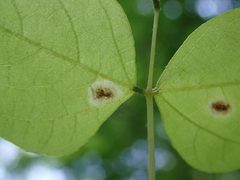
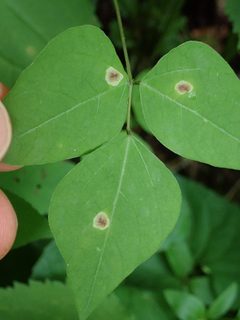
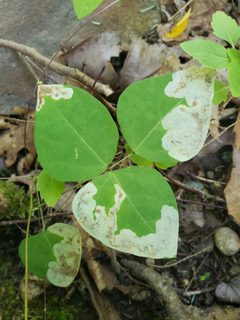
The can be distinguished from other North American Gracillariidae by its association with Amphicarpaea bracteata as the sole known larval . The small size (8 mm wingspan) and geographic range in northeastern North America are supporting characters. The leaf mines on hog-peanut (A. bracteata) are diagnostic for the stages. Separation from other Leucanthiza species requires examination of genitalia or molecular data.
Images
Appearance
are very small with a wingspan of about 8 mm. The body and wing coloration pattern has not been described in detail in available sources. As a member of Gracillariidae, adults likely exhibit the -typical narrow, wings and reduced wing venation characteristic of microlepidoptera.
Habitat
Associated with supporting its plant Amphicarpaea bracteata (hog-peanut), which occurs in moist woodlands, thickets, and stream banks. The has been recorded in deciduous forest regions of the northeastern United States and adjacent Canada.
Distribution
Canada: Ontario, Québec. United States: Connecticut, Illinois, Kentucky, Maryland, Pennsylvania, Vermont. The distribution corresponds to the range of its plant in eastern and central North America.
Diet
Larvae feed on Amphicarpaea bracteata (hog-peanut), a legume in the Fabaceae. They mine the leaves of this plant. feeding habits are unknown.
Host Associations
- Amphicarpaea bracteata - larval Leaf-mining larvae feed exclusively on this
Life Cycle
Larvae are leaf miners on Amphicarpaea bracteata. The complete has not been described in detail. likely occurs within the leaf mine or in a silken cocoon on the plant, as is typical for Gracillariidae. The number of per year is unknown.
Behavior
Larvae create leaf mines on the plant. has not been documented specifically for this .
Ecological Role
As a , larvae may influence leaf longevity and photosynthetic capacity of the plant Amphicarpaea bracteata. The serves as prey for including birds, spiders, and .
Human Relevance
No direct economic or medical significance. The may be encountered by botanists or naturalists examining hog-peanut plants. It is documented in citizen science platforms with over 500 iNaturalist observations.
Similar Taxa
- Other Leucanthiza species in the Leucanthiza are morphologically similar and require dissection or plant association for reliable identification
- Other Gracillariidae on FabaceaeSeveral gracillariid leaf miners feed on legumes; plant specificity and mine help distinguish them