
Cameraria gaultheriella
(Walsingham, 1889)
gaultheria leafminer moth
Cameraria gaultheriella is a small gracillariid with a wingspan of 10–11 mm. The is native to western North America (British Columbia, California, Oregon) and Maine, with records in Europe where it has not established. Larvae are leaf miners on Gaultheria species, particularly Gaultheria shallon (salal). respond to (E,Z)-8,10-tetradecadienal, a shared with related Cameraria species.
Pronunciation
How to pronounce Cameraria gaultheriella: /ˌkæməˈrɛəriə ɡɔˌlθɛriˈɛlə/
These audio files are automatically generated. While they are not always 100% accurate, they are a good starting point.
Identification
Distinguished from sympatric Cameraria lobatiella by association: C. gaultheriella occurs exclusively in humid habitats with Gaultheria shallon, while C. lobatiella occupies arid Garry oak sites. The two also exhibit different seasonal periods. Both species are attracted to (E,Z)-8,10-tetradecadienal, so trapping alone does not differentiate them; habitat context is essential for identification.
Images
Appearance
Small with wingspan of 10–11 mm. As a member of Gracillariidae, likely have narrow, forewings with distinct patterning typical of the , though specific markings are not documented in available sources.
Habitat
Humid, wet dominated by salal (Gaultheria shallon) bushes. In British Columbia, occurs in coastal western redcedar-salal understory . Not found in adjacent arid Garry oak where congeneric C. lobatiella occurs.
Distribution
Native to North America: British Columbia (Canada); California, Oregon, and Maine (United States). in the Netherlands and United Kingdom, but not established.
Seasonality
period occurs in summer months; seasonal pattern differs from sympatric C. lobatiella, though specific months are not documented in available sources.
Diet
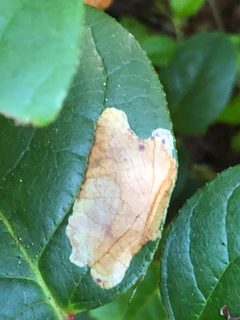
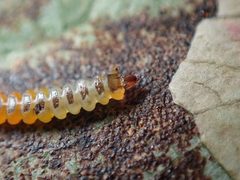
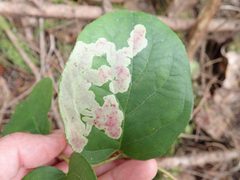
Larvae mine leaves of Gaultheria , including Gaultheria shallon (salal). Mining creates internal leaf tunnels (blotch or serpentine mines), though specific mine is not described in available sources.
Host Associations
- Gaultheria shallon - larval primary ; exclusive association documented in trapping studies
Behavior
are attracted to synthetic (E,Z)-8,10-tetradecadienal, the of the European horse chestnut leafminer C. ohridella. This cross-attraction suggests shared or similar chemistry among Cameraria . Exhibits strong fidelity, with captures occurring exclusively in Gaultheria-dominated sites.
Ecological Role
As a , larvae likely function as a herbivore on Gaultheria shallon, potentially affecting leaf physiology and contributing to nutrient cycling through deposition. No evidence of significant impact on plants is documented.
Human Relevance
Subject of research due to cross-attraction to C. ohridella pheromone. in Europe have been detected but did not establish, suggesting limited potential. No economic or agricultural significance is documented.
Similar Taxa
- Cameraria lobatiellaSympatric in British Columbia and attracted to same compound; distinguished by exclusive occurrence in arid Garry oak (Quercus garryana) versus humid Gaultheria sites, and different seasonal period
- Cameraria ohridellaEuropean whose synthetic attracts C. gaultheriella; distinguished by geographic range and association with Aesculus (horse chestnut) rather than Gaultheria
More Details
Pheromone Research
Field studies demonstrate that C. gaultheriella and C. lobatiella can be separated by specificity despite responding to the same synthetic . The possibility of additional cryptic pheromone components specific to each has been proposed but not confirmed.
European Adventive Records
Detected in the Netherlands and United Kingdom as non-established , likely through accidental introduction. Failure to establish suggests ecological or climatic limitations outside native range.