Bucculatrix pomifoliella
Clemens, 1860
Apple Skeletonizer Moth
Bucculatrix pomifoliella is a minute in the Bucculatricidae, first described by James Brackenridge Clemens in 1860. It is known from eastern and central North America, with records spanning from the northeastern United States through the Midwest and into western Canada. The is recognized for its leaf-mining larvae that feed on Rosaceae plants, including apple (Malus) and various Prunus species.
Pronunciation
How to pronounce Bucculatrix pomifoliella: //ˌbʌkjʊˈleɪtrɪks ˌpɑːmɪfoʊliˈɛlə//
These audio files are automatically generated. While they are not always 100% accurate, they are a good starting point.
Identification
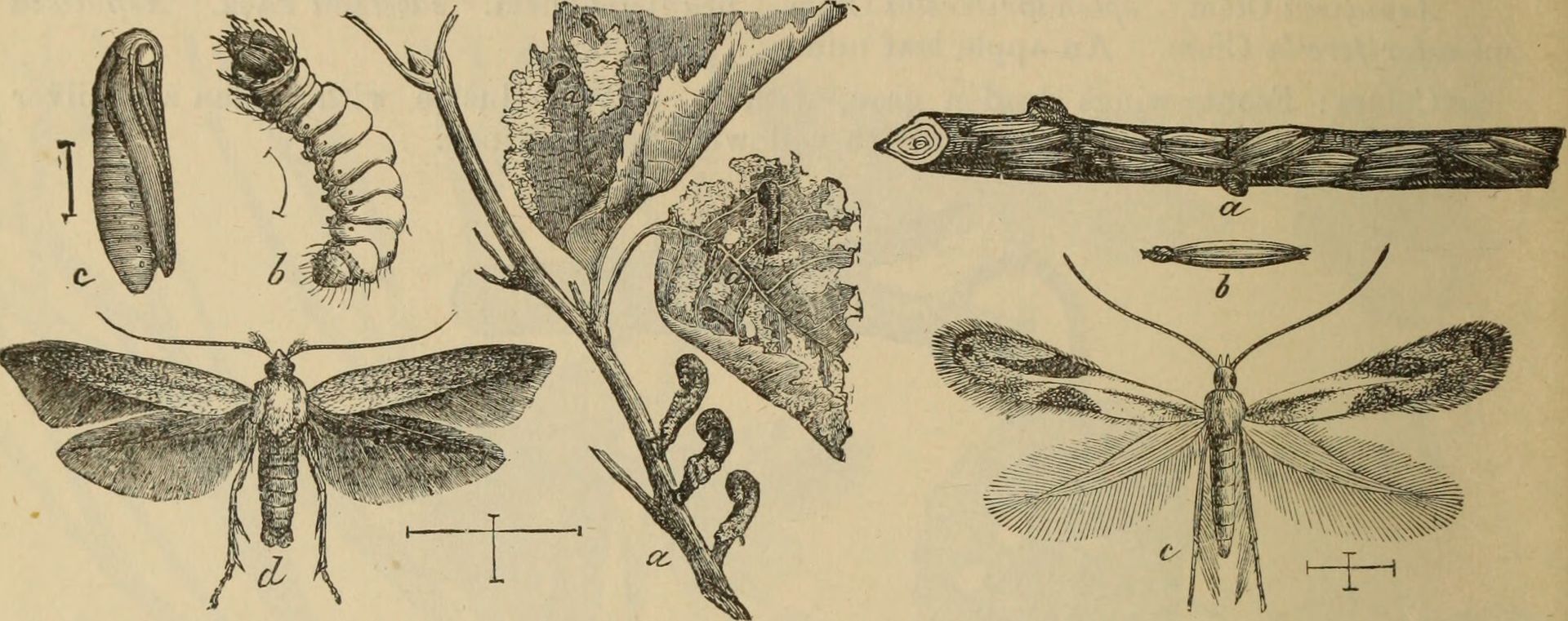
The combination of minute size (wingspan under 8 mm), narrow wings, and association with Rosaceae leaf mines distinguishes this from similar microlepidoptera. Definitive identification requires examination of genitalia or molecular analysis; superficially similar Bucculatrix species occur on different plants. The larval mine is a slender, winding gallery on the upper leaf surface.
Images
Appearance
are extremely small with a wingspan of 7–7.5 mm. The wings are narrow and elongated, typical of the . Coloration is generally inconspicuous, with mottled gray or brownish tones that provide camouflage against bark and foliage.
Habitat
Found in deciduous forests, orchards, and suburban areas where Rosaceae plants grow. Associated with trees and shrubs in the rose , including wild and cultivated .
Distribution
North America: recorded from Pennsylvania, Virginia, New Jersey, New York, Massachusetts, Maine, Ontario, Ohio, Tennessee, North Carolina, Missouri, Utah, Washington, British Columbia, Indiana, Manitoba, Quebec, and West Virginia.
Seasonality
have been recorded on wing from April to September. There are up to two per year.
Diet
Larvae feed on trees and shrubs in the Rosaceae, including Prunus serotina (black cherry), Amelanchier laevis (smooth serviceberry), Physocarpus malvaceus (ninebark), and Malus (apple). They mine the leaves of their plant. feeding habits are not documented.
Host Associations
- Prunus serotina - larval
- Amelanchier laevis - larval
- Physocarpus malvaceus - larval
- Malus - larval apple
Life Cycle
Up to two per year. Larvae are leaf miners, creating slender galleries in leaves of plants. occurs in a ribbed cocoon, a characteristic feature of the Bucculatrix. Detailed descriptions of and pupal stages are not available.
Behavior
Larvae are solitary leaf miners. are presumably or , as is typical for the . No other specific have been documented.
Ecological Role
As a , larvae contribute to natural herbivory pressure on Rosaceae . The species serves as prey for including birds, spiders, and . No specialized ecological relationships have been documented.
Human Relevance
The "Apple Skeletonizer " suggests potential economic significance to apple , though the extent of damage is likely minimal given the small size of larvae and mines. The is primarily of interest to lepidopterists and naturalists documenting microlepidoptera diversity.
Similar Taxa
- Bucculatrix pomifoliellaOther Bucculatrix on Rosaceae; requires genitalia examination or plant association for separation
- Other GracillarioideaNumerous small with leaf-mining larvae; wing venation and genitalia distinguish
More Details
Taxonomic history
Described by James Brackenridge Clemens in 1860, a prominent American entomologist who made significant contributions to the study of North American microlepidoptera.
Common name origin
The name "Apple Skeletonizer " likely derives from the visible damage caused by larval feeding on apple leaves, though the mines are slender galleries rather than true skeletonization.