Bucculatrix angustata
Frey & Boll, 1876
Narrow Bucculatrix
A small in the Bucculatricidae, described by Frey and Boll in 1876. have a wingspan of 7–9 mm and are active from April to October across much of North America. The larvae are known to feed on Aster, Solidago, and occasionally Erigeron .
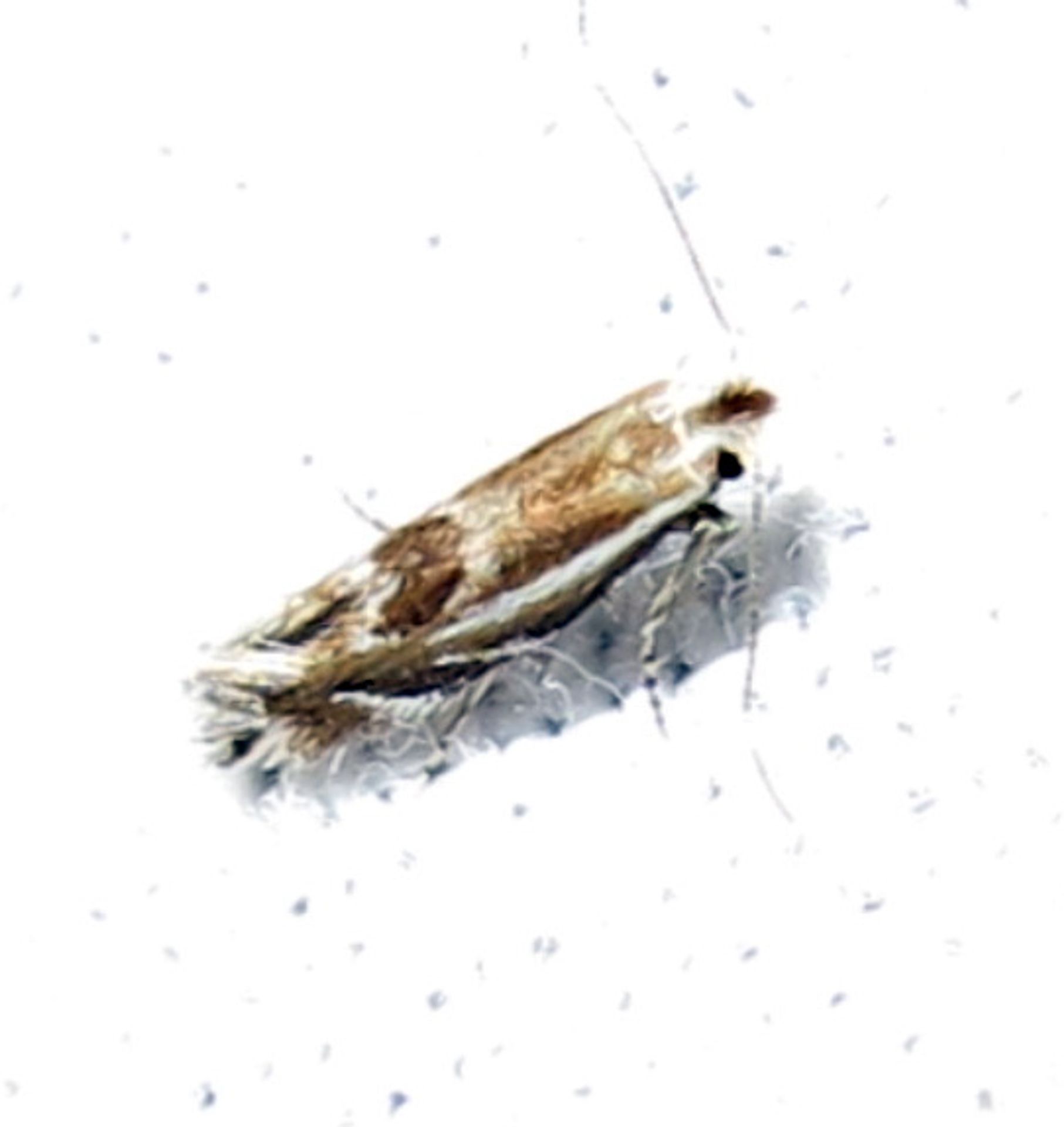
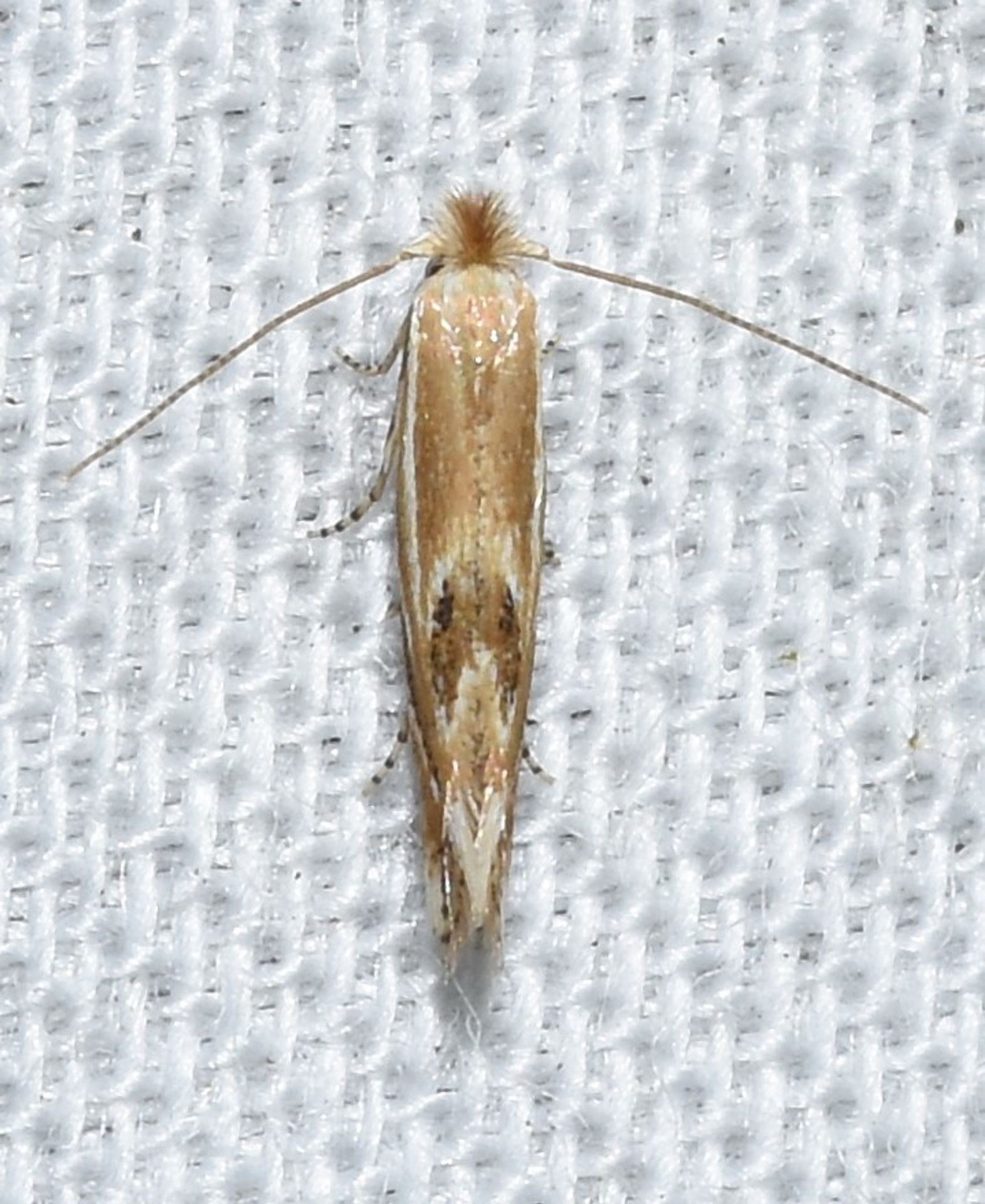
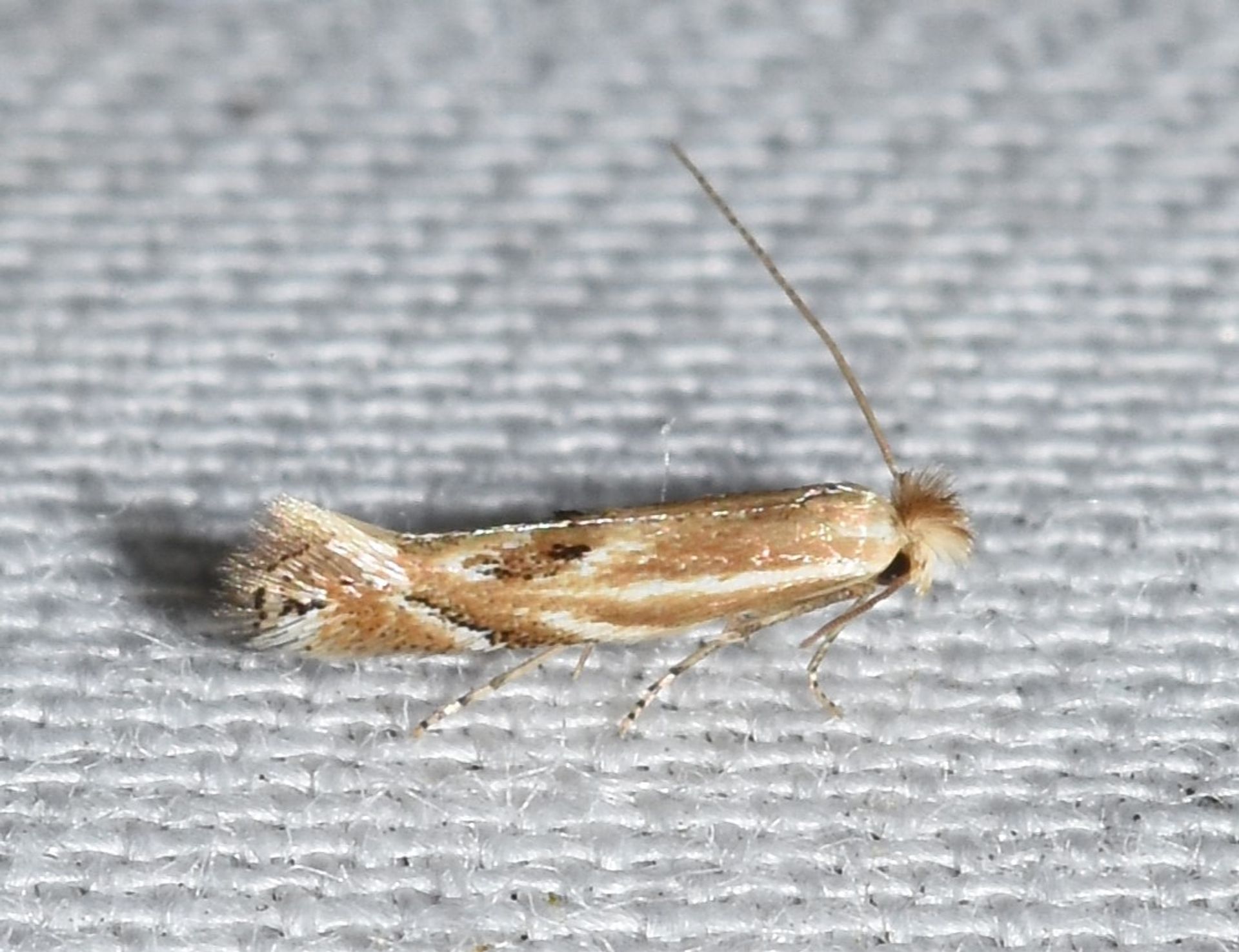
Pronunciation
How to pronounce Bucculatrix angustata: /ˌbʊkjuˈlætrɪks æŋˈɡʌsteɪtə/
These audio files are automatically generated. While they are not always 100% accurate, they are a good starting point.
Identification
Distinguished from other Bucculatrix by a combination of wing pattern and genitalia; precise identification requires dissection or expert examination. The extremely small size (7–9 mm wingspan) and narrow wings are characteristic of the . Differentiation from other small Gracillarioidea relies on -level traits including wing venation and larval .
Images
Appearance
have a wingspan of 7–9 mm. As a member of Bucculatricidae, it is an extremely small with narrow, pointed wings typical of the .
Habitat
Associated with open where plants (Aster, Solidago, Erigeron) occur, including meadows, prairies, forest edges, and disturbed areas. The has been documented in urban and suburban settings where native asters and goldenrods persist.
Distribution
Recorded from the eastern United States westward to Texas, Utah, and Washington. The distribution spans multiple ecological regions from the eastern deciduous forest through the Great Plains to the Intermountain West and Pacific Northwest.
Seasonality
have been recorded on wing from April to October, indicating a relatively long period that may encompass multiple .
Diet
Larvae feed on Aster, Solidago, and rarely Erigeron . No feeding habits have been documented.
Host Associations
- Aster - larval
- Solidago - larval
- Erigeron - larval rarely used
Life Cycle
Complete with , larval, pupal, and stages. Larvae are leaf miners or skeletonizers on plants. occurs in a ribbed cocoon, a characteristic feature of the Bucculatrix.
Behavior
are and attracted to light. The larval habit of feeding on Asteraceae involves mining or skeletonizing leaves. Specific behavioral details for this species are poorly documented.
Ecological Role
As a herbivore on native Asteraceae, larvae contribute to nutrient cycling and serve as prey for and other natural enemies. The is part of the diverse of microlepidoptera in grassland and open forest .
Human Relevance
No documented economic importance. Occasionally encountered by naturalists during surveys and citizen science events such as the City Nature Challenge.
Similar Taxa
- Other Bucculatrix speciesSimilar size and wing shape; require genitalia examination or plant association for reliable identification.
- GracillariidaeRelated of small leaf-mining ; differ in wing venation and larval .
More Details
Taxonomic history
First described by Heinrich Frey and Jacob Boll in 1876, representing one of the earlier described in a now containing over 100 species worldwide.
Observation frequency
As of the source date, iNaturalist records 875 observations, indicating it is relatively well-documented among microlepidoptera, likely due to its broad distribution and association with common plants.