
Bucculatrix albertiella
Busck, 1909
Oak Ribbed Casemaker, Oak-ribbed Skeletonizer
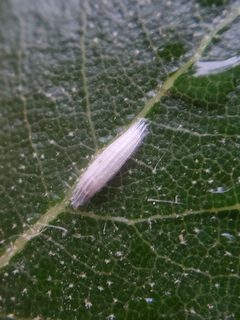
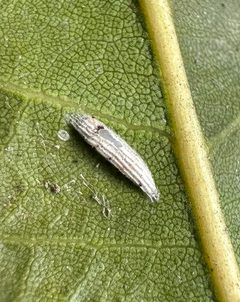
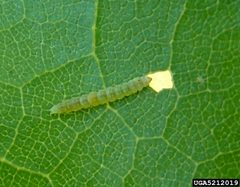
A minute in the Bucculatricidae, described by August Busck in 1909. The is restricted to the west coast of North America and is associated with oak . Larvae are leaf miners that produce distinctive ribbed cocoons.
Pronunciation
How to pronounce Bucculatrix albertiella: //ˌbʌk.jəˈlæ.trɪks ælˌbɜːr.tiˈɛl.lə//
These audio files are automatically generated. While they are not always 100% accurate, they are a good starting point.
Identification
The combination of extremely small size (8–9 mm wingspan), west coast distribution, and association with Quercus distinguishes this from other Bucculatrix. Ribbed cocoon structure, a -level trait, may aid identification of stages. Separation from other western North American Bucculatrix species requires examination of genitalia or molecular data.
Images
Appearance
have a wingspan of 8–9 mm. The exhibits the reduced size and narrow, pointed forewings typical of the Bucculatrix. Coloration and pattern details are not well documented in available sources.
Habitat
Associated with oak-dominated where Quercus occur. Specific microhabitat preferences are not documented.
Distribution
Pacific coastal region of the United States. Records are concentrated in California, Oregon, and Washington.
Seasonality
activity period is not well documented in published sources.
Diet
Larvae feed on Quercus (oaks). Specific species within the are not recorded in available literature.
Host Associations
- Quercus - larval food plant-level association; specific oak not documented
Life Cycle
Larvae are leaf miners. The produces the characteristic ribbed cocoon for that gives the its 'ribbed cocoon-makers.' Detailed timing is not available.
Behavior
are presumably based on -level patterns. Larval mining produces internal leaf damage on oak foliage.
Ecological Role
As a , larvae contribute to oak foliage herbivory and nutrient cycling in oak woodland . impacts on trees are likely minimal given the minute size of individuals.
Human Relevance
No documented economic or cultural significance. Occasionally encountered by lepidopterists and naturalists conducting surveys of microlepidoptera.
Similar Taxa
- Other Bucculatrix speciesMany share small size and ribbed cocoon structure; reliable separation requires dissection or analysis
- Nepticulidae (microlepidoptera)Similar minute size and leaf-mining habit; distinguished by wing venation and
More Details
Taxonomic history
Originally described by August Busck in 1909. The epithet 'albertiella' is of uncertain etymology. The 1910 date sometimes cited appears to be a publication delay rather than the original description year.
Observation frequency
The has 156 observations on iNaturalist as of the data cutoff, suggesting it is infrequently encountered despite being geographically restricted, likely due to its minute size.