
Dyspteris abortivaria
(Herrich-Schäffer, [1855])
Bad-wing Moth, the bad-wing
Dyspteris abortivaria, commonly known as the Bad-wing , is a of geometrid moth in the Geometridae. The refers to its distinctive wing , where the hindwings are notably reduced in size compared to the forewings. It is found throughout North America and is one of the more frequently observed geometrid moths, with over 6,000 documented observations.
Pronunciation
How to pronounce Dyspteris abortivaria: //dɪsˈtɛrɪs əˌbɔːrtɪˈvɛəriə//
These audio files are automatically generated. While they are not always 100% accurate, they are a good starting point.
Identification
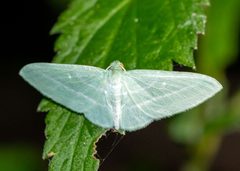
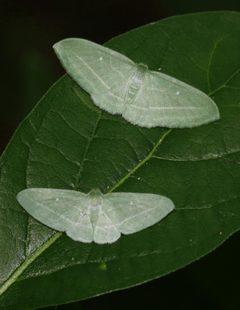
The combination of normal-sized, triangular forewings with highly reduced hindwings distinguishes this from all other North American geometrid moths. The wing reduction is visible even in live specimens at rest. The overall brownish-gray coloration with wavy lines is similar to other Larentiinae, but no other species in the region shares the "bad-wing" .
Images
Appearance
have triangular forewings with a wingspan of approximately 20-25 mm. The forewings are typically brownish-gray with fine, wavy transverse lines and a small discal spot. The hindwings are dramatically reduced, appearing as small, rounded lobes that give the its . At rest, the moth holds its forewings flat or slightly tented, with the tiny hindwings concealed beneath.
Habitat
Occurs in deciduous and mixed forests, woodlands, and forest edges. are frequently attracted to light in wooded areas.
Distribution
North America, with records from Canada through the United States including Vermont and surrounding regions.
Seasonality
are active from spring through fall, with peak activity during summer months. Multiple may occur in southern portions of the range.
Life Cycle
Larval plants are reported to include various woody plants, though specific associations require verification.
Behavior
are and strongly attracted to light. The reduced hindwings likely limit capability; the may be a weak or infrequent flier compared to fully-winged geometrids.
Human Relevance
Frequently encountered by enthusiasts and researchers due to its distinctive appearance and attraction to light traps. The serves as an example of wing reduction in Lepidoptera.
Similar Taxa
- Other Larentiinae mothsShare similar forewing patterns and coloration, but all possess fully developed hindwings of normal size.
More Details
Wing reduction
The extreme reduction of the hindwings in D. abortivaria is unusual within Geometridae and represents an evolutionary reduction in -related structures. The functional significance of this trait remains unclear.
Taxonomic note
The specific epithet 'abortivaria' directly references the aborted or reduced hindwing development.