
Triphosa
Stephens, 1829
Species Guides
3Triphosa is a of in the Geometridae, Larentiinae, established by Stephens in 1829. The genus occurs across the Holarctic region, with documented in Europe, Asia, and North America. Several species, notably Triphosa dubitata and T. sabaudiata, exhibit obligate cave-dwelling as , a distinctive ecological trait within the Geometridae. The genus has been subject to recent taxonomic revision in the Western Palaearctic, resulting in synonymies and description of new species.
Pronunciation
How to pronounce Triphosa: //trɪˈfoʊ.sə//
These audio files are automatically generated. While they are not always 100% accurate, they are a good starting point.
Identification
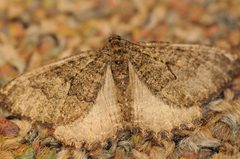
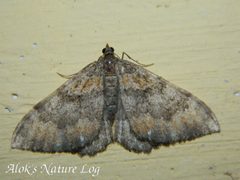
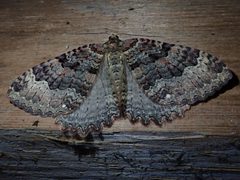
Triphosa can be distinguished from related Larentiinae by wing pattern and genitalia ; specific diagnostic characters vary by species and require examination of type series or reference to illustrated revisions. of cave-dwelling species (T. dubitata, T. sabaudiata) may be recognized by their presence in cave , though this is not universal across the genus. has been employed as an additional identification tool in recent taxonomic revisions.
Images
Habitat
varies by and life stage. of some species are obligate cave-dwellers, inhabiting limestone caves and maintaining activity at temperatures between −3°C and 8°C. Distribution within caves is regulated by wall and microclimatic conditions. Larval stages occur outside caves, with plant associations recorded for Rhamnus (Rhamnaceae) and Prunus (Rosaceae).
Distribution
Holarctic distribution. Documented in Europe (including France, Denmark, Norway, Sweden), Central Asia, the Middle East, East Asia (Korea, Japan, Taiwan), and North America (USA: Vermont, California). Specific cave studied in Korea (Baram and Ssang caves, Gangwon Province) and France (Grotte de la Scierie, Haute-Savoie).
Seasonality
activity of cave-dwelling observed year-round within caves, with investigations conducted from March to October and in January. activity at cave entrances has been documented.
Diet
Larvae feed on plants in the Rhamnaceae (Rhamnus) and Rosaceae (Prunus). feeding habits are not documented.
Host Associations
- Rhamnus - larval plant Rhamnaceae
- Prunus - larval plant Rosaceae
Life Cycle
Holometabolous development with , larva, pupa, and stages. In cave-dwelling , adults enter caves immediately after from pupae and remain in caves for long-term survival, while egg-larva-pupa stages occur outside caves dependent on food plants.
Behavior
of T. dubitata and T. sabaudiata exhibit obligate cave-dwelling , entering caves immediately after and remaining inside rather than being active outside. These adults show specific temperature preferences (−3°C to 8°C) and spatial distribution patterns within caves regulated by wall and climatic conditions. activity occurs at cave entrances.
Ecological Role
function as permanent residents within cave , with spatial distribution and movements interacting with other cave-dwelling including the spider Meta menardi, the harvestman Nelima aurantiaca, and the mosquito Culex pipiens. Larvae function as external herbivores on woody plants.
Similar Taxa
- HydriaHydria ravulata was formerly placed in Triphosa but transferred to Hydria based on morphological and molecular data; requires careful examination of genitalia and wing pattern for correct assignment.
More Details
Taxonomic History
Recent integrative revision of Western Palaearctic resulted in synonymy of T. agnata with T. sabaudiata, clarification of T. taochata , description of two new species (T. silviae, T. lecerfi), and transfer of H. ravulata to Hydria. Lectotypes designated for T. taochata and H. ravulata.
Research Status
in Colombia noted as poorly known and understudied, with high suggested. Most detailed ecological studies focus on cave-dwelling of T. dubitata and T. sabaudiata in Korea and France.
Sources and further reading
- BugGuide
- Wikipedia
- GBIF taxonomy match
- iNaturalist taxon
- NCBI Taxonomy
- Catalogue of Life
- Notes préliminaires sur la distribution spatiale de Meta menardi, Triphosa dubitata, Triphosa sabaudiata, Nelima aurantiaca et Culex pipiens au sein d'un écosystème cavernicole (Grotte de la Scierie: Hte.-Savoie)
- Ecological characteristics of a cave‐dwelling moth species, Triphosa dubitata (Lepidoptera: Geometridae), in Baram and Ssang caves in Gangwon Province, Korea
- An integrative taxonomic revision of the genus Triphosa Stephens, 1829 (Geometridae: Larentiinae) in the Middle East and Central Asia, with description of two new species