
Anticlea vasiliata
Guenée, 1857
Variable Carpet Moth, Early Carpet
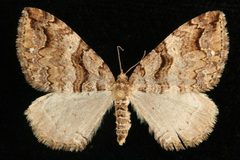
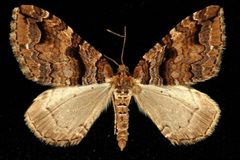
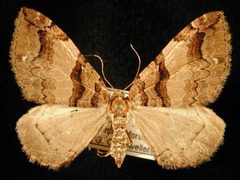
Anticlea vasiliata, commonly known as the variable carpet or early carpet, is a geometrid moth found across northern North America. are active in spring, with a wingspan of approximately 30 mm. The was first described by Achille Guenée in 1857.
Pronunciation
How to pronounce Anticlea vasiliata: /ænˈtɪk.li.ə ˌvæ.səˈlaɪ.ə.tə/
These audio files are automatically generated. While they are not always 100% accurate, they are a good starting point.
Identification
The combination of small size (30 mm wingspan), spring period (April–June), and northern North American distribution helps distinguish this from similar carpet moths. Variable wing patterns require careful examination for definitive identification.
Images
Distribution
Northern United States and southern Canada, ranging from Newfoundland and Labrador east to Maryland, west to California, and north to British Columbia. Documented in Canadian provinces including Alberta, Manitoba, and Saskatchewan, and in Vermont, USA.
Seasonality
are on wing from April to June.
Diet
Larvae feed on Rubus idaeus (red raspberry) and Rosa carolina (Carolina rose). diet is not documented.
Host Associations
- Rubus idaeus - larval food plantred raspberry
- Rosa carolina - larval food plantCarolina rose
Life Cycle
Larval stage feeds on documented plants. occurs in spring (April–June). Complete details are not documented.
Similar Taxa
- Other Anticlea speciesSimilar size, wing shape, and pattern; require genitalia examination or careful wing pattern analysis for separation
- Other Larentiinae carpet mothsShared characteristics including size range and resting posture; spring period and plant associations may help distinguish A. vasiliata
More Details
Taxonomic authorship
Sources vary slightly on the year of description: Guenée, 1857 per NCBI and original description, versus [1858] per Catalogue of Life. The 1857 date is generally accepted.
Observation frequency
The has been documented in 4,764 iNaturalist observations, indicating it is relatively well-recorded within its range.