
Pasiphila rectangulata
(Linnaeus, 1758)
Green Pug
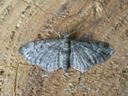
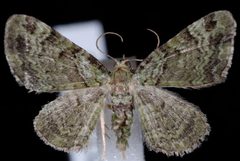
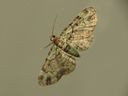
Pasiphila rectangulata (Green Pug) is a Palearctic geometrid native to Europe and northern Asia, accidentally introduced to North America in 1970 and possibly Japan. are typically green with variable patterning, though a dark brown form (f. anthrax) occurs in urban areas. The shows strong attraction to light and has a single per year with peak adult from June to July or August.
Pronunciation
How to pronounce Pasiphila rectangulata: /pəˈsɪfɪlə rɛkˌtæŋɡjuˈleɪtə/
These audio files are automatically generated. While they are not always 100% accurate, they are a good starting point.
Images
Habitat
Native range: rural gardens, orchards, and areas with shrubs. In North America: established in northeastern United States. Urban frequently exhibit the dark brown form f. anthrax.
Distribution
Native to Palearctic region from Ireland to Japan and the Near East. Introduced to North America (first detected 1970), established in northeastern United States. Possibly introduced to Japan (first described 1957).
Seasonality
Single brooded. fly from June until July or August, with peak typically in June-July in North American .
Diet
Larvae feed on buds, flowers, and leaves of plants. Specific host associations differ regionally: in Europe primarily on Rosaceae including Malus (apple), Pyrus (pear), Prunus (cherry), Crataegus (hawthorn), Prunus spinosa (blackthorn), and Amelanchier; in North America documented on multiple Ribes (currants and gooseberries) including Ribes rubrum, R. nigrum, R. cynosbati, R. hirtellum, R. americanum, R. glandulosum, R. missouriense, R. oxyacanthoides, R. triste, R. spicatum, and cultivated Grossularia reclinata.
Life Cycle
overwinter in cracks on trees and shrubs. Larvae emerge in spring and early summer to feed on plant buds, flowers, and leaves. occurs in soil or leaf litter. emerge in late spring to early summer. Single per year.
Behavior
are and strongly attracted to light; frequently collected using mercury vapour light traps.
Ecological Role
Herbivore on woody shrubs and trees. Larvae can cause significant damage in orchards, particularly to apple, pear, and currant/gooseberry .
Human Relevance
Potential pest of cultivated fruit crops including apples, pears, cherries, currants, and gooseberries. Subject of sequencing for genomic research.
Sources and further reading
- BugGuide
- GBIF taxonomy match
- iNaturalist taxon
- NCBI Taxonomy
- Catalogue of Life
- Hosts, Pattern of Seasonal Emergence and Flight, and New Distributional Records of Palearctic <I>Pasiphila rectangulata</I> (Lepidoptera: Geometridae) in the Northeastern United States
- The genome sequence of the Green Pug moth, Pasiphila rectangulata (Linnaeus, 1758).